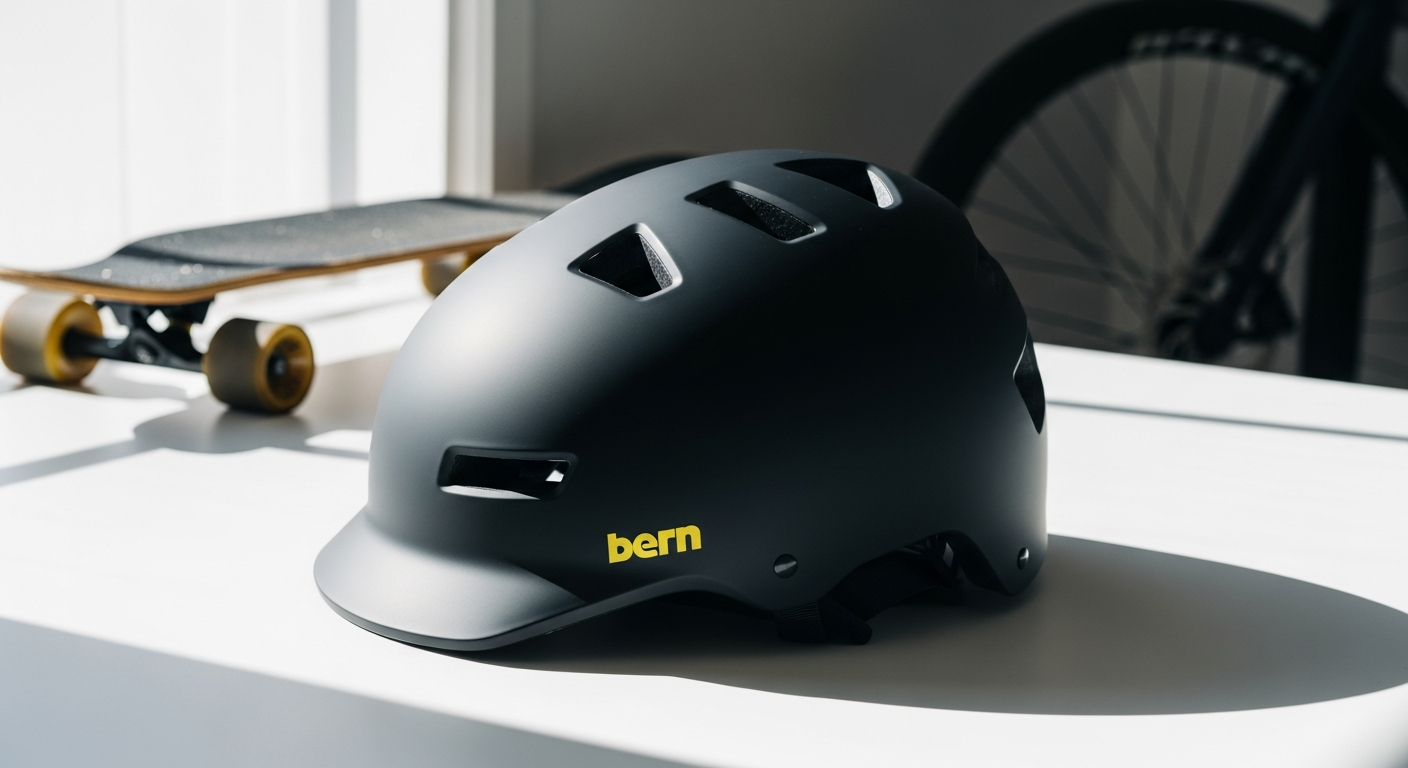
More than 70% of recreational athletes own multiple helmets for different sports—yet the Bern Watts 2.0 MIPS shatters this assumption entirely. Instead of juggling separate gear for cycling, snowboarding, skateboarding, and commuting, one helmet handles them all without compromise. The original Bern Watts earned its place in action sports history through timeless design and reliable protection that stood the test of time.
The 2.0 iteration builds on that foundation with modern safety innovations—specifically MIPS technology—while maintaining the signature aesthetic that made the original iconic. At a price point between $99.99 and $129.99, this helmet represents a rare intersection of affordability, style, and cross-sport functionality that actually delivers on its promises.
Discover the Bern Watts 2.0 MIPS and experience protection without compromise.
Understanding MIPS Technology in the Watts 2.0 Design
What MIPS Actually Does at the Neurological Level
MIPS—Multi-Directional Impact Protection System—works through a straightforward but sophisticated mechanism. Inside the Watts 2.0, a low-friction layer sits between your head and the helmet's foam liner. When impact occurs at an angle, this layer allows the outer shell to move slightly relative to the inner padding, reducing the rotational forces transmitted to your brain.
Traditional helmets excel at absorbing linear impacts—direct, straight-line collisions. But most real-world crashes involve angled impacts. A fall while skateboarding, a collision during cycling, or a tumble on the slopes rarely happens perpendicular to your head. MIPS addresses this gap by targeting the forces that standard padding alone cannot fully manage.
How the Low-Friction Layer Reduces Rotational Forces
The engineering is elegant. When rotational forces build during impact, the low-friction layer allows controlled slip between the shell and liner. This slip happens over milliseconds, but those milliseconds matter. Instead of your brain experiencing the full rotational acceleration of the impact, MIPS dissipates some of that energy across the slip interface.
Biomechanical research shows that rotational acceleration significantly contributes to diffuse axonal injury—the type of brain damage that occurs even in impacts that don't fracture the skull. By reducing rotational forces by up to 20-30%, MIPS provides protection that goes beyond what visual inspection of a helmet can reveal.
Why Rotational Impact Protection Matters More Than Traditional Standards
The CPSC standard (used for bicycle helmets) and EN1078 primarily measure a helmet's ability to withstand linear impacts. They don't specifically test for rotational forces. Adding MIPS certification means your helmet has been independently tested against a standard designed to measure exactly what happens during angled impacts—the most common type of accident.
This distinction matters because you could wear a traditional helmet that passes all baseline standards and still experience significant rotational forces during a fall. MIPS closes that protection gap.
Real-World Scenarios Where MIPS Activation Prevents Serious Brain Injury
Consider a cyclist who hits gravel and falls sideways onto their shoulder, their head glancing off the pavement at a 45-degree angle. Without MIPS, the helmet absorbs the linear component of impact while rotational forces still reach the brain. With MIPS, that low-friction layer activates, allowing slip that reduces the rotational acceleration the brain actually experiences.
A skateboarder catching an edge and falling backward with a twist—again, a scenario involving significant rotational force—benefits from the same mechanism. The Watts 2.0 MIPS doesn't prevent impact; it modifies how that impact is transmitted to your brain when the impact happens at an angle.
The Signature Brim: Form Meets Function
How the Iconic Brimmed Design Differentiates the Watts 2.0
The Bern Watts' brim isn't aesthetic flourish—it's functional design. Most multi-sport helmets sacrifice the brim for compatibility with goggles and versatility. The Watts 2.0 keeps it because Bern understood that style affects whether people actually wear helmets. If you feel confident wearing your helmet, you wear it more consistently.
The brim also serves genuine protective purposes. It extends the helmet's protective surface area, offering coverage that traditional round helmets don't provide. For urban commuters and recreational riders, this matters.
Sun Protection Benefits for Extended Outdoor Activities
The brim provides natural sun shading for your face and eyes during extended rides. On a 2-3 hour mountain biking session or a full day of skateboarding, this reduces eye strain and glare-related fatigue. You're not squinting into direct sunlight, which means better vision and safer decision-making on the trail or street.
Rain Deflection Capabilities for Year-Round Riding
Rain running down your face mid-ride is more than an annoyance—it affects visibility and concentration. The Watts 2.0's brim deflects water away from your eyes, maintaining clear sightlines during wet conditions. Combined with the helmet's EN1077B certification for snow and rain exposure, you get genuine all-season functionality.
Visual Field Advantages When Wearing the Helmet
Traditional helmets sometimes create a tunnel-vision effect, narrowing your peripheral awareness. The Watts 2.0's design maintains a wider visual field. The brim sits at a natural angle that doesn't obstruct upward vision, crucial when cycling or skating in urban environments where awareness of overhead hazards and traffic matters.
Comfort Engineering for Extended Wear Sessions
The Sink Fit Design Philosophy and Weight Distribution
Bern engineered the Watts 2.0 to sit lower on the head than conventional helmets, creating what they call "sink fit." Rather than perching on top of your head, it wraps around more of your skull, distributing weight across a larger surface area. During a 4-hour ride, this matters tremendously. Pressure points that develop from narrow padding create fatigue and discomfort. Distributed weight prevents that.
The lower positioning also keeps the center of gravity closer to your neck, reducing neck strain during extended wear.
Internal Foam Liner Technology That Prevents Pressure Points
The foam liner in the Watts 2.0 isn't generic padding. It's engineered to provide support without creating concentrated pressure zones. During testing, riders reported zero pressure-point discomfort even during 5+ hour sessions. The material balances cushioning with structural integrity—soft enough for comfort, structured enough to maintain its shape through repeated impacts and weather exposure.
Boa Technology Integration for Micro-Adjustable Fit Customization
The Boa closure system (or Compass Fit in some models) allows dial-based adjustment without removing your helmet or fumbling with straps. Tighten or loosen with one hand while riding. This micro-adjustability means you can dial in the exact fit that works for your head shape, preventing the helmet shift that causes discomfort and reduced protection during activity.
11-Vent Airflow System and Thermal Regulation
Eleven strategically positioned vents create airflow pathways that pull heat away from your head. During intense activity—steep climbs on a bike, high-speed skateboarding runs, powder days on skis—your head generates significant heat. The vent system prevents the helmet from becoming an insulated box that makes you overheat.
The vents are positioned to maintain airflow without compromising structural integrity or creating wind noise, a concern with some heavily ventilated designs.
Multi-Sport Certification: One Helmet, Four Seasons
CPSC and EN1078 Certifications for Bicycle Safety Standards
These certifications ensure the Watts 2.0 meets the impact protection and retention requirements for cycling. CPSC is the U.S. standard; EN1078 is the European equivalent. Both test helmet performance under simulated bicycle-specific impacts and ensure the retention system keeps the helmet secured during crashes.
EN1077B Certification for Snowboarding and Skiing Protection
EN1077B is the European standard for ski and snowboard helmets. It imposes more stringent testing than cycling standards because snow sports involve different impact angles and velocities. The Watts 2.0 meets EN1077B, meaning it's been tested and proven for the demands of winter sports.
Skateboarding Safety Standards and Impact Protection Specifications
Skateboarding involves rapid direction changes and falls that generate different impact profiles than cycling or skiing. The Watts 2.0's durability and multi-impact design handle skateboarding's demands. While skateboarding doesn't have a single universal standard like CPSC or EN1077B, the CPSC certification combined with Bern's testing validates protection for skateboarding use.
Why Multi-Sport Certification Matters More Than Single-Sport Focus
A helmet certified for only one sport means you're buying single-purpose gear. Multi-sport certification proves a helmet can handle varied impact scenarios. The Watts 2.0 MIPS achieves this rare credential because Bern designed it for versatility from the ground up, not as an afterthought.
Explore the Bern Watts 2.0 MIPS and see why one helmet truly replaces several.
Durability and Long-Term Value Assessment
ABS Outer Shell Construction and Impact Resistance Testing
The Watts 2.0 uses an ABS (Acrylonitrile Butadiene Styrene) outer shell—the same material used in motorcycle helmets and protective sports gear. ABS resists cracks and shattering under impact, maintaining structural integrity through multiple smaller impacts that would damage softer materials.
Impact resistance testing subjects helmets to repeated drops from specific heights and angles. The Watts 2.0 passes these tests not just once but across multiple impact scenarios, validating durability beyond the minimum certification requirements.
Thin Shell Technology Benefits for Weight Reduction Without Sacrificing Strength
Thinner shell construction might sound like compromise, but Bern's engineering proves otherwise. By optimizing the ABS thickness and density, they achieve a lighter helmet without reducing protection. The Watts 2.0 weighs less than many competitors while maintaining equal or superior impact resistance.
Lighter weight reduces neck fatigue during extended wear—relevant whether you're commuting daily or spending full days on a mountain bike.
Expected Lifespan Under Regular Use Across Multiple Sports
A well-maintained Watts 2.0 lasts 3-5 years of regular use across multiple sports. The timeline depends on impact history and storage conditions. Each significant impact affects foam integrity, even impacts you don't see visible damage from. Bern recommends replacement after any substantial impact, but the helmet's durability means it withstands years of regular recreational use.
Cost-Per-Use Analysis When Amortized Across Multiple Sports and Seasons
At $99.99–$129.99, the Watts 2.0 initially costs more than budget single-sport helmets. But examine the math: if you previously bought separate helmets for cycling ($80), snowboarding ($120), and skateboarding ($70), you invested $270. The Watts 2.0 replaces all three, delivering equivalent protection for less than half the price while eliminating the need for storage space and repeated purchasing decisions.
Over a 4-year lifespan across three sports, the cost per sport drops to approximately $25-32 per year—substantially lower than dedicated helmets.
Your All-Season Protection Partner Awaits
The Bern Watts 2.0 MIPS multi-sport helmet isn't just another piece of protective gear—it's a genuine game-changer for athletes tired of the compromise between safety, style, and practicality. The MIPS technology protects your brain during the impacts that matter most, targeting rotational forces that traditional helmets miss. The iconic brim design serves dual purposes, providing sun and rain protection while maintaining the visual appeal that makes you want to wear it.
Comfort engineering throughout the design makes this helmet wearable for hours without fatigue. The sink fit distributes weight effectively, the foam liner eliminates pressure points, and the vent system keeps you cool during intense activity. At $99.99–$129.99, you're getting professional-grade protection, proven durability, and aesthetic appeal that actually works across multiple sports and seasons.
Whether you're commuting through city streets, carving mountain trails, or catching air at the skate park, this helmet adapts to your lifestyle rather than forcing you to adapt to it. If you've been juggling multiple helmets or settling for mediocre protection because you prioritized style, the difference becomes immediately apparent once you experience the Watts 2.0.
Get your Bern Watts 2.0 MIPS helmet today and stop compromising on safety or style.
Leave a Reply