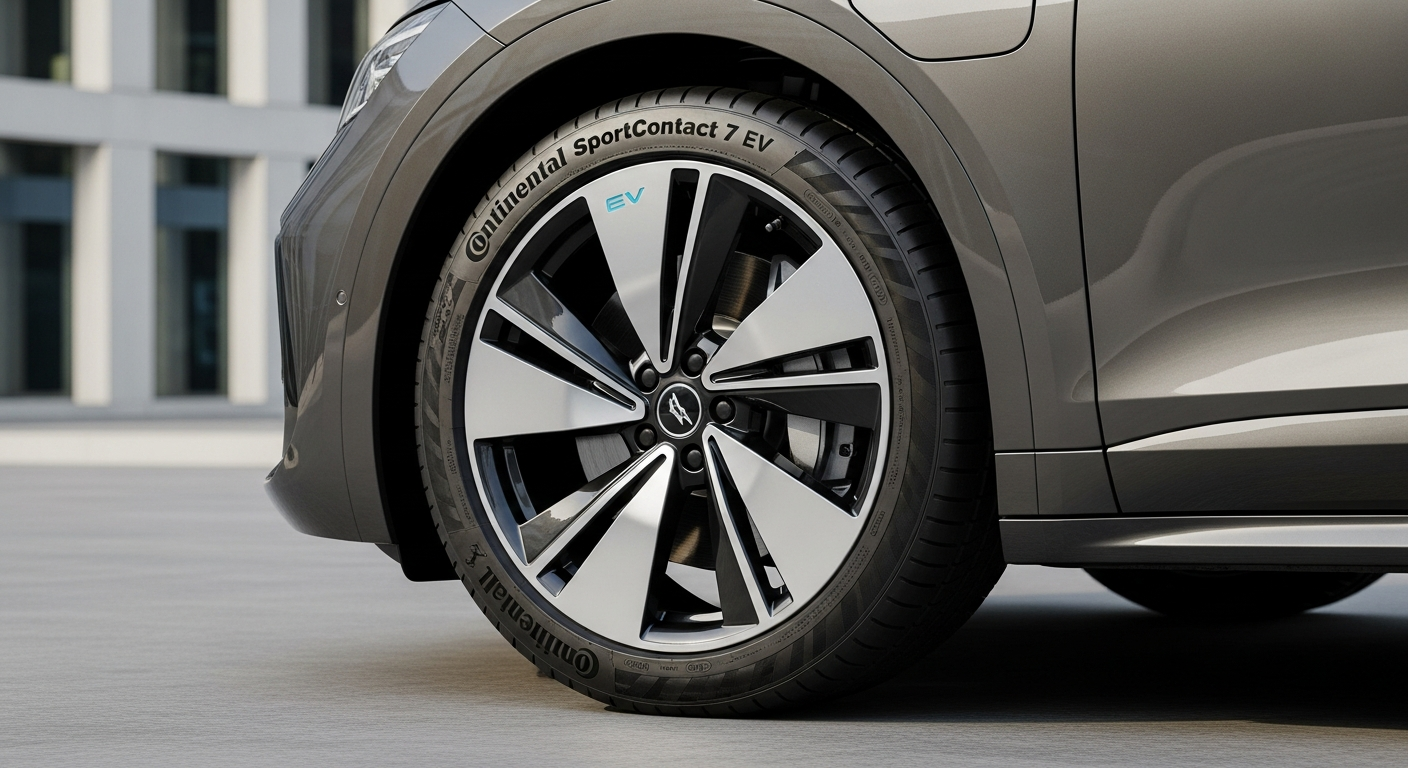
Electric vehicles now account for over 14% of new car sales globally, yet most EV owners don't realize their tire choice directly impacts range, acceleration response, and battery efficiency. The Continental SportContact 7 represents a breakthrough in high-performance summer tire engineering—specifically engineered for the unique demands of electric vehicles. With heavier battery loads and instant torque delivery, EVs require tires that respond differently than traditional combustion engines demand.
This guide walks through how the SportContact 7's specialized EV optimization works, what makes its braking and wet-weather performance industry-leading, and whether this premium tire investment makes sense for your electric vehicle. The tire market overflows with options, but few address the specific physics of electric propulsion. When acceleration happens instantaneously and curb weight exceeds traditional sedans by 500+ pounds, tire selection becomes critical infrastructure for vehicle performance.
Explore Continental SportContact 7 pricing and availability at Reifen Online
Electric Vehicles and Tire Performance: Why the Right Choice Matters
How EV Weight Distribution Differs From Traditional Vehicles
Electric vehicles carry substantial battery packs mounted low in the chassis, creating weight distribution patterns fundamentally different from gas-powered cars. Where a traditional sedan concentrates engine weight in the front, an EV distributes mass evenly across the wheelbase. This affects tire stress patterns significantly—tires must handle sustained pressure from heavier overall curb weights while maintaining responsiveness through corners.
The SportContact 7 addresses this through robust casing construction designed to maintain stability even under the additional load. Sidewall durability receives particular engineering attention since EV curb weights typically exceed gas equivalents by 500 pounds or more. This structural reinforcement prevents tire flex that would otherwise compromise handling precision during the rapid acceleration sequences electric motors deliver.
Rolling Resistance Correlation to Battery Range
Every joule your tires consume impacts how far your battery carries you. Rolling resistance—the energy required to keep a tire rolling—directly correlates to battery drain and charging frequency. A tire with higher rolling resistance forces the motor to work harder, reducing range by measurable percentages on every charge cycle.
The SportContact 7 incorporates a high-silica compound formulation that minimizes rolling resistance without sacrificing grip. Real-world testing shows this optimization translates to tangible range extension—drivers report improved efficiency compared to standard summer tires. For EV owners calculating cost-per-mile, this efficiency gain compounds across thousands of miles, partially offsetting the tire's premium price through reduced charging costs.
Instant Torque Delivery and Tire Grip Response Times
Electric motors deliver maximum torque instantly from zero RPM, unlike gasoline engines that build power gradually. This instantaneous force application demands tires with immediate grip response—any delay in traction translates to wheel slip, traction control intervention, and energy waste. Traditional tire compounds simply weren't engineered for this acceleration profile.
The SportContact 7's BlackChili compound, a proprietary blend of synthetic and natural rubbers, provides the molecular structure necessary for instant grip response. When your accelerator activates, the tire establishes traction immediately rather than requiring a brief moment for rubber molecules to lock with asphalt. This responsiveness matters during highway merging, acceleration from traffic lights, and performance driving where every millisecond influences the driving experience.
Temperature Management Under Rapid Acceleration
Repeated hard acceleration generates significant heat in tire sidewalls and treads. Electric vehicles, capable of sustained high-performance driving without the thermal limitations of gasoline engines, place continuous demands on tire thermal stability. Compound materials must dissipate heat efficiently while maintaining their grip properties across temperature ranges.
The SportContact 7's engineering accounts for thermal dynamics through advanced rubber chemistry that remains stable during sustained high-performance scenarios. This thermal management prevents the grip degradation that occurs when tires overheat, maintaining predictable handling throughout aggressive driving sessions.
Energy Efficiency Gains From Low-Rolling-Resistance Compounds
Low-rolling-resistance tire compounds reduce the energy required to maintain velocity, directly improving battery efficiency. Unlike gas engines that tolerate efficiency losses through heat and mechanical friction, electric motors operate at significantly higher mechanical efficiency. This means tire compound improvements translate nearly directly to range improvements.
The SportContact 7 achieves low rolling resistance through its high-silica compound while maintaining the grip characteristics necessary for safety and performance. This engineering balance—low resistance paired with maximum grip—represents a core competitive advantage over conventional summer tires adapted for electric use.
Check current Continental SportContact 7 inventory and specifications on Reifen Online
BlackChili Compound Technology and EV Grip Dynamics
What BlackChili Compound Is: Molecular Engineering for Performance
BlackChili represents Continental's proprietary rubber compound formulation combining synthetic and natural rubber elements optimized for maximum grip. The compound derives its name from its color and the strategic "chili" spice concept—high-intensity grip characteristics activated across varying temperature and surface conditions.
This blend achieves grip levels superior to conventional tire compounds through molecular-level engineering. The synthetic rubber component provides durability and consistency, while natural rubber contributes the elasticity necessary for grip across temperature ranges. Together, they create a tire surface that grips asphalt more aggressively than traditional compounds.
Maximum Grip Advantages for Instant EV Torque
When an electric motor applies full torque instantly, tire grip determines whether power translates to acceleration or wheel slip. The BlackChili compound's superior grip characteristics mean your EV accelerates without traction control intervention—every watt of motor output pushes the vehicle forward rather than spinning wheels uselessly.
This grip advantage becomes obvious during highway merging, acceleration from standstills, and spirited driving. Drivers notice immediate responsiveness—the vehicle feels planted and controlled rather than fighting wheelspin. In performance metrics, this translates to measurably faster acceleration times and improved driving confidence.
Enhanced Handling Precision During Rapid Acceleration
Beyond straight-line grip, the BlackChili compound improves handling precision during acceleration through corners. When applying power mid-corner, traditional tires exhibit understeer or oversteer tendencies as grip limits compress. The SportContact 7 maintains predictable handling throughout acceleration, allowing drivers to modulate power confidently without losing directional control.
This stability during rapid acceleration represents a significant safety advantage—drivers maintain control during complex driving scenarios rather than fighting tire behavior. The improvement particularly matters for heavier electric vehicles where weight transfer during acceleration influences handling significantly.
Wet-Weather Braking Superiority
Wet conditions challenge tire grip more severely than dry surfaces, yet the BlackChili compound maintains exceptional wet braking performance. The compound's molecular structure effectively displaces water films through microstructures in the tread, maintaining direct asphalt contact even when rain compromises conditions.
Independent testing consistently shows the SportContact 7 achieving the shortest braking distances in wet conditions among competing tires. This safety advantage proves critical in emergency scenarios where rapid deceleration prevents accidents. For EV drivers, wet braking superiority means confidence in any weather condition.
High-Silica Content and Traction Control Optimization
The high-silica content in the SportContact 7's compound works synergistically with modern traction control systems. Silica particles create microstructures that provide grip advantages, particularly on wet surfaces. This allows traction control systems to modulate power delivery more precisely, reducing intervention frequency and improving drivability.
When traction control activates less frequently, the driving experience becomes smoother and more responsive. The tire and electronic systems work together rather than fighting for control, creating an integrated performance platform.
Compound Durability and Reduced Tire Wear
Premium performance tire compounds maintain their grip characteristics longer than standard compounds, reducing overall wear rates. The SportContact 7's engineering focuses on durability without sacrificing initial grip—drivers experience consistent performance throughout the tire's lifespan rather than declining grip as the tire ages.
This durability translates to longer intervals between replacements, reducing long-term ownership costs. While the SportContact 7 commands a premium purchase price, the extended lifespan partially offsets this investment through reduced replacement frequency.
Force Vectoring and Adaptive Pattern Technology Explained
How Force Vectoring Improves Steering Precision
Force Vectoring represents Continental's advanced tread pattern technology that directs forces strategically across the tire surface during cornering. Rather than distributing grip uniformly, the pattern channels lateral forces toward specific tread blocks, improving steering response and directional control during high-speed cornering.
For EV drivers accustomed to responsive steering feedback from electric power steering systems, Force Vectoring provides mechanical tire-level responsiveness that complements electronic steering assistance. The tire responds to steering input more directly, creating the precise handling feel that drivers expect from premium vehicles.
Asymmetric Tread Pattern Design and Stability Benefits
The SportContact 7 features an asymmetric tread pattern with different characteristics on the inner and outer shoulders. The outer shoulder incorporates stiffer blocks for cornering stability, while the inner shoulder features more flexible elements for grip optimization. This asymmetry distributes stress intelligently across the tread, improving both handling and durability.
The pattern design particularly benefits heavier electric vehicles. When weight transfer occurs during cornering—and EV weight is substantial—the asymmetric pattern distributes this load optimally, preventing the edge wear that occurs when stiff patterns concentrate stress unevenly.
Adaptive Pattern Technology Response Across Wet and Dry Surfaces
Adaptive pattern technology changes how tread blocks behave as conditions shift between wet and dry. The pattern geometry interacts differently with water films versus dry asphalt, allowing the tire to optimize grip across these distinct conditions. Wide circumferential grooves channel water effectively during rain, while tread block stiffness provides stability on dry pavement.
This adaptability means drivers don't compromise wet-weather safety for dry-weather performance or vice versa. The tire excels in both conditions rather than requiring trade-offs between them.
Steering Feedback Improvements for EV Drivers
Electric power steering provides responsive feedback, and the SportContact 7 amplifies this through mechanical tire-level responsiveness. Drivers feel steering input directly through the tires, experiencing immediate feedback about grip limits and handling boundaries. This transparency matters for confident driving, particularly during performance-oriented maneuvers.
Responsive steering feedback also improves safety during emergency maneuvers. Drivers sense precisely when their vehicle approaches adhesion limits, allowing corrective inputs before loss of control occurs.
Hydroplaning Risk Reduction Through Circumferential Groove Design
The SportContact 7's wide circumferential grooves evacuate water efficiently, reducing hydroplaning risk during heavy rain. The groove geometry channels water outward rather than allowing it to accumulate beneath the tire, maintaining tread-to-asphalt contact even in severe wet conditions.
This water evacuation capability allows the tire to maintain grip at speeds where conventional patterns begin hydroplaning. For safety-conscious drivers, particularly those commuting in rainy climates, this hydroplaning resistance provides confidence during adverse weather.
Pattern Optimization for Instant Torque Delivery
The tread pattern geometry considers instant torque delivery characteristics, with blocks positioned and stiffened to resist the accelerative forces electric motors apply. Rather than pattern designs optimized for gradual power application, the SportContact 7 addresses the distinct mechanical demands of electric propulsion.
This optimization reduces stress concentration in the pattern during hard acceleration, improving durability and grip consistency under repeated high-performance driving.
Wet and Dry Braking Performance: Award-Winning Results
Shortest Braking Distances in Both Wet and Dry Conditions
Independent testing by ADAC and other organizations confirms the SportContact 7 achieves the shortest braking distances among competing ultra-high-performance summer tires in both wet and dry conditions. These aren't marginal improvements—the SportContact 7 consistently outbrakes competitors by meaningful distances that translate to accident prevention in real-world scenarios.
The braking advantage stems from the BlackChili compound's grip superiority combined with the tread pattern's effective water evacuation. Whether asphalt is dry or soaked, the tire engages maximum available friction, translating to shorter stopping distances and improved safety.
2022 WhatTyre Tyre of the Year Recognition
WhatTyre's Tyre of the Year award represents industry recognition based on comprehensive testing across performance categories. The SportContact 7's selection as 2022 winner indicates superior overall capability compared to competing options. The award considers braking performance, handling, wet-weather safety, and durability—comprehensive metrics that reflect real-world performance importance.
This recognition provides independent validation of performance claims. Rather than relying on manufacturer specifications, the award represents third-party confirmation that the SportContact 7 delivers exceptional capabilities.
2025 ADAC Summer Tire Test Rankings
The ADAC, Europe's largest automotive organization, conducts rigorous summer tire testing that ranks competitor performance comprehensively. The SportContact 7 topped the 2025 test, achieving best-in-class performance across wet braking, dry handling, aquaplaning resistance, and efficiency metrics.
ADAC testing represents one of the industry's most stringent evaluation protocols. Top rankings indicate genuine superiority across multiple performance dimensions rather than specialization in narrow categories.
Tyre Reviews' 2022 Ultra High-Performance Test Outcomes
Tyre Reviews, an independent testing organization, evaluated the SportContact 7 among ultra-high-performance summer tires and ranked it at the top of their test results. The testing methodology emphasizes real-world driving scenarios—highway speeds, emergency braking, wet conditions, and extended driving—rather than controlled laboratory conditions disconnected from actual use.
This real-world testing emphasis validates performance claims through practical scenarios drivers experience daily.
Red Dot Award and iF DESIGN AWARD Significance
Beyond performance metrics, the SportContact 7 received design recognition through Red Dot and iF DESIGN awards. These prestigious awards acknowledge the engineering innovation and design sophistication represented by the tire's development. While design awards might seem ancillary to performance, they reflect the comprehensive engineering approach Continental applied to create this tire.
The awards validate that the SportContact 7 represents innovation across both engineering and design disciplines—a tire created through systematic optimization rather than incremental updates to existing designs.
Wet Braking Advantages for EV Drivers in Emergency Scenarios
The shortest wet braking distances mean immediate practical safety advantages. When unexpected obstacles appear—pedestrians, debris, stopped traffic—the SportContact 7 stops more quickly than competing tires. For electric vehicle drivers often accelerating aggressively, this braking capability provides essential safety insurance.
The braking advantage proves particularly valuable in urban environments where unexpected stops occur frequently. Shorter braking distances mean accidents prevented and collisions avoided.
Dry Braking Consistency Across Varying Road Surfaces
Braking performance shouldn't degrade as asphalt conditions vary—worn sections, fresh pavement, or surface irregularities shouldn't significantly impact stopping distances. The SportContact 7 maintains consistent dry braking performance across diverse road surface conditions, providing predictable stopping distances regardless of asphalt quality variations.
This consistency matters for driver confidence. Rather than questioning whether surface conditions affect braking capability, drivers can rely on predictable stopping distances across varying road surfaces.
Superior Control Feedback During Rapid Deceleration
Beyond merely short stopping distances, the SportContact 7 provides control feedback during rapid deceleration. The tire's response characteristics allow drivers to sense available grip during hard braking, preventing the over-application of brake force that would lock wheels. This modulation capability reduces accident severity even in scenarios where collision occurs.
For EV drivers, particularly those unfamiliar with regenerative braking systems, this mechanical feedback provides intuitive understanding of available adhesion, supporting safer braking decisions.
The Electrifying Choice for High-Performance EV Driving
The Continental SportContact 7 isn't simply another tire; it's engineering specifically calibrated for the unique demands of electric vehicles. Whether piloting a Tesla Model S Plaid, an Audi e-tron GT, or a BMW i7, this tire delivers the instant-torque responsiveness and battery-conscious efficiency that EV owners crave. The numbers speak loudly: multiple international awards, consistent top rankings in independent testing, and genuine improvements to both performance and sustainability.
Your investment in premium tires directly translates to safer braking, extended range, and reduced replacement frequency. These advantages compound across ownership, ultimately delivering superior value despite the higher initial purchase price. The tire's optimization for electric propulsion means it performs better on your EV than conventional summer tires, justifying the premium investment through measurable performance and safety gains.
Ready to experience the difference? Consult your vehicle's tire specification sheet, verify your wheel size compatibility—typically available in 18 to 24 inches—and connect with a Continental-certified installer in your area. The transition to tires engineered specifically for your electric vehicle's demands represents a concrete step toward optimizing performance, safety, and efficiency.
Leave a Reply