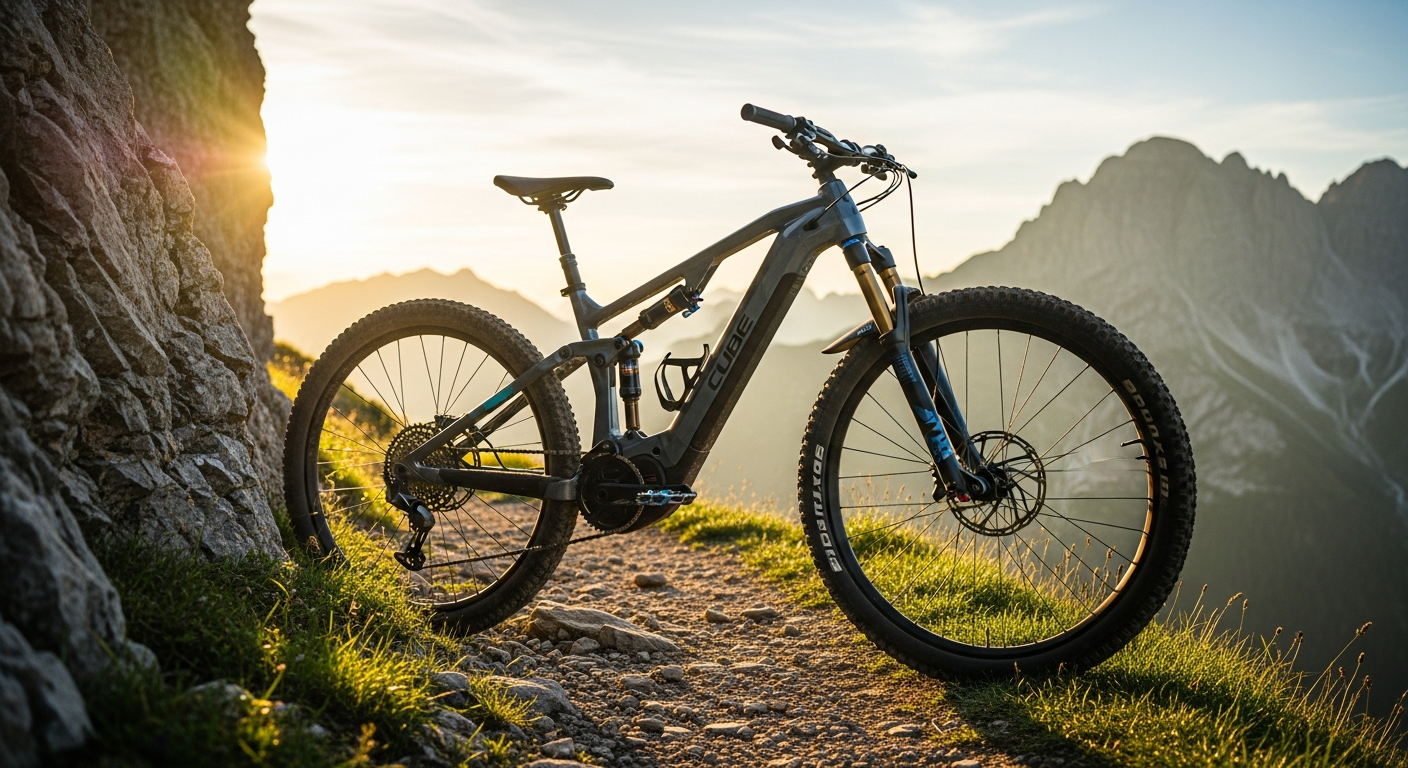
Over 60% of e-MTB riders cite limited range as their biggest frustration—yet the Cube Reaction Hybrid Pro 800 2026 shatters that concern with a massive 800Wh battery and the latest Bosch Performance Line CX Gen 5 motor. The electric mountain bike market has exploded, creating a bewildering array of choices, but most options force you to compromise: pick a capable trail machine or something practical for daily use, rarely both.
The Cube Reaction Hybrid Pro 800 2026 refuses that trade-off. It's engineered to crush technical terrain on weekends while handling commute duties and weekend touring with equal confidence, all wrapped in Cube's lightweight Aluminium Superlite frame. Whether you're grinding up alpine passes or navigating urban streets with mudguards and integrated lighting, this bike adapts to your ambitions.
Discover the Cube Reaction Hybrid Pro 800 2026 and explore your next adventure today.
Bosch Performance Line CX Gen 5 Motor—The Heart of Trail Power
85Nm Torque Standard with 100Nm eBike Flow Upgrade
The Bosch Performance Line CX Gen 5 motor sits at the core of this bike's climbing prowess. Standard output delivers 85Nm of torque—enough to propel you up steep grades without bogging down. But here's where the eBike Flow app changes the equation: unlock the hidden 100Nm setting, and you gain an immediate 18% power boost. That differential isn't theoretical; riders notice it on back-to-back climbs where the extra torque transforms grinch-grade pitches into manageable sections. Torque directly translates to climbing power and technical terrain capability. More torque means better traction on loose rock, faster acceleration from standstill on technical sections, and sustained power when fatigue sets in during long climbs.
Smooth, Responsive Pedal Assistance
The Gen 5 motor introduces a noticeable refinement over previous Bosch generations. Earlier systems felt linear—acceleration happened in predictable chunks. The Gen 5 responds more organically to your pedal input, creating a sensation closer to having stronger legs rather than a mechanical assistance. Riders report that this system feels less "boosted" and more natural, especially during rapid cadence changes on technical terrain where smooth, responsive feedback matters.
Motor Efficiency and Heat Management
Sustained climbs generate heat in any e-bike motor. The CX Gen 5 includes improved thermal management, allowing the system to maintain power output even during extended ascents. This matters on mountain passes or sustained technical climbing where you're grinding for 30–45 minutes. Older motors would throttle assistance to protect themselves. The Gen 5 stays cooler and maintains consistency, critical for serious mountain riding.
Compatibility with Bosch eBike Flow App
The eBike Flow app unlocks practical customization. Beyond the 100Nm torque unlock, you can adjust assistance curves for different terrain, monitor detailed ride analytics, and manage motor settings without visiting a service center. This software flexibility means the bike adapts to your preferences rather than forcing you into preset modes.
Motor Reliability and Warranty Coverage
Bosch motors carry a two-year warranty on the motor and battery—standard in the e-bike industry but reassuring given the investment. Real-world reliability data shows Bosch systems logging 10,000+ miles with minimal issues when properly maintained. Service is available through Cube's dealer network, though replacement parts (motor or battery) represent significant expenses outside warranty periods.
800Wh Battery and Range Reality—Planning Your Rides
Real-World Range Expectations
The headline 30–170 mile range is accurate but context-dependent. At 30 miles, you're riding steep terrain at maximum assistance with a heavier rider. At 170 miles, you're on smooth gravel with minimal elevation and light pedaling. Reality for most riders falls between 60–120 miles, depending on three variables: terrain elevation gain, rider weight (and gear), and assistance level selected.
Hard numbers: flat terrain at lower assistance extends range significantly. Mountainous terrain with continuous climbing drains the battery faster. A 180-pound rider carrying touring gear will see shorter range than a 150-pound commuter riding empty hills.
Battery Integration into the Frame
The 800Wh PowerTube battery integrates directly into the downtube, not bolted externally. This design choice improves aesthetics dramatically—the bike doesn't look bulky or aftermarket. More practically, it protects the battery from impacts and weather exposure. The integration also lowers the center of gravity slightly, improving handling characteristics.
Charge Time and Battery Management
Full charging takes approximately 5–6 hours with the standard charger. For daily commuting, overnight charging becomes routine. Battery management systems built into the Bosch pack monitor cell health continuously, extending longevity. Avoiding complete discharge cycles and maintaining temperatures between 32–77°F preserves battery capacity over years.
Range Anxiety Solutions
Real riders maximize range through practical strategies: dial back assistance levels on rolling terrain where you can self-power; use lower assistance until the battery reaches 20%, then ramp up; plan routes with charging opportunities on extended tours; carry the compact charger on multi-day adventures. Many owners of FE variants install additional luggage systems specifically to carry spare batteries on backcountry trips.
Battery Replacement Costs and Longevity
Expect 80% capacity retention after 5–7 years of regular use. Replacement batteries cost €800–€1,000, substantial but manageable over a decade of ownership. Bosch batteries typically outlast the rest of the bike mechanically.
Drivetrain and Braking—Precision Where It Matters
Shimano XT 12-Speed System with 10-51T Cassette
The 10-51T cassette range suits the Cube's versatility perfectly. The 10-tooth small cog enables efficient pedaling on flat sections and descents where motor assistance isn't needed. The 51-tooth largest cog provides climbing gearing that makes steep ascents manageable even when motor assistance depletes. Twelve speeds split the range finely, reducing gear jumps that cause cadence disruption on technical terrain.
Gear Shifting Performance on Technical Terrain
Shimano XT derailleurs shift cleanly even under load during rocky sections. The system tolerates modest misalignment without dropping chains—important for riders navigating rough terrain where derailleur strikes happen occasionally. Speed of shifts on XT components is imperceptible, not distracting during critical moments.
Shimano BR-MT420 Hydraulic Disc Brakes
Two-hundred-three-millimeter rotors paired with four-piston hydraulic calipers provide confident stopping power on steep descents. The extra rotor size dissipates heat effectively during sustained braking, critical when descending long technical sections where repeated braking builds temperature. Stopping power matches or exceeds expectations for a hardtail e-MTB.
Brake Maintenance and Pad Longevity
Brake pads typically last 1,500–2,500 miles before replacement becomes necessary. Routine maintenance involves cleaning rotors and checking pad thickness quarterly. Hydraulic systems require occasional bleed procedures—a task best left to service centers—every 2–3 years depending on usage and environmental exposure.
Component Upgrade Potential
Many owners upgrade to Saint or Guide drivetrain components first, appreciating the heavier-duty construction for technical riding. Brake upgrades follow for riders wanting maximum stopping power. The XT baseline is solid but leaves room for customization based on individual riding demands.
Suspension, Geometry, and Handling—Comfort Meets Control
SR Suntour X1-32 LO-R Air Fork with 120mm Travel
The SR Suntour X1-32 LO-R air fork provides 120mm of travel (100mm on smaller frames) that absorbs trail chatter without creating a wallowy feel. Air suspension tuning allows customization through pressure adjustment—stiffer for heavier riders or rocky terrain, softer for plush response on smoother sections. The fork's responsiveness suits both tight singletrack and broad fire roads, adapting to varied riding.
Cube's Agile Ride Geometry
Frame geometry balances responsiveness with stability. The slacked-out head tube angle (67.5°) provides confidence on descents while the 75° seat tube angle keeps weight forward for climbing traction. This middle ground works across diverse terrain without specializing for any single condition. The wheelbase geometry encourages quick directional changes, valuable on technical singletrack where precision matters.
Size Split System for Optimal Fit
Cube adjusts geometry across frame sizes, not simply scaling parts. Smaller frames receive slightly steeper angles and shorter reaches for proportional handling. Larger frames maintain slack angles and longer reaches appropriate for bigger bodies. This system ensures that geometry benefits don't vanish across the size range—a critical detail many manufacturers ignore.
Schwalbe Smart Sam 2.6-Inch Tires on Tubeless-Ready Wheels
The 2.6-inch Smart Sam provides reliable traction across diverse terrain without excessive rolling resistance. The tread pattern balances knobby grip with rolling efficiency, important for hybrid usage. Tubeless-ready construction allows conversion without special tools, reducing flat probability and permitting lower tire pressures for enhanced traction without pinch flats.
Dropper Seatpost Compatibility
The bike accepts dropper seatposts, transforming descending capability significantly. Lowering the seat during descents shifts weight rearward, improving stability and control. Most owners eventually add a dropper for technical riding, though the base setup works acceptably on moderate terrain.
Fully Equipped vs. Base Model—What You're Actually Getting
Mudguards and Luggage Carrier Benefits
Fully Equipped (FE) variants include mudguards that keep road spray and mud off you and drivetrain components. The benefit compounds in wet seasons or muddy conditions—your drivetrain stays cleaner, shifting remains crisp, and maintenance intervals stretch. The integrated luggage carrier expands carrying capacity, essential for commuting with gear or light touring.
Integrated Lighting Systems
Built-in lights powered by the main battery eliminate separate charging demands. Front and rear lights switch on automatically during low-light conditions on some FE variants, adding convenience and visibility. Integrated systems simplify the package versus bolting on aftermarket solutions.
Kickstand and Fender Practicality
A kickstand transforms commuting practicality, allowing you to park the bike unattended at trailheads or shops without leaning against barriers. Fenders (mudguards) extend drivetrain life in wet conditions, reducing maintenance frequency and improving reliability during unpredictable weather.
Weight Penalty of FE Variants
The FE package adds approximately 1.5–2 pounds compared to base models. This difference is negligible for most riders on longer rides where convenience outweighs minor weight penalties. On technical climbs or tight singletrack, the weight matters less than the assistance from the motor.
Customization Options and Aftermarket Compatibility
The bike accepts standard mountain bike accessories easily. Racks, bags, and lights from third-party manufacturers integrate without issues. You're not locked into proprietary Cube systems, allowing budget-conscious assembly or gradual upgrades. Starting with the base model and adding components over time works perfectly.
Value Proposition at €2,749–€3,199—Is It Worth the Investment?
Bosch System Premium versus Mid-Drive Alternatives
Premium Bosch pricing reflects quality engineering and market dominance. Alternative mid-drive systems (Yamaha, Shimano) cost similarly, so you're not overpaying for the name. Bosch's advantage is resale value—buyers recognize the system as reliable, supporting stronger second-hand markets. Software compatibility and app ecosystem add practical value beyond raw performance.
Component Quality Relative to Price
At €2,749–€3,199, the Cube delivers Shimano XT groupsets and hydraulic brakes found on bikes costing €1,000 more without electric systems. The suspension, frame construction, and geometry alignment represent exceptional value relative to similarly-priced alternatives. You're not sacrificing component quality for the electrical package—instead, you're getting both.
Depreciation and Resale Market
Cube models hold value better than boutique brands, losing approximately 35–45% of original price after three years of normal use. This retention means the effective cost of ownership is lower than headline pricing suggests. A bike purchased at €3,000 might sell for €1,650–€1,950 three years later, making annual cost around €450–€450—manageable for serious cyclists.
Cost Per Mile Over 5-Year Ownership Period
Assuming 2,000 miles annually (10,000 total), the purchase price amortizes to €0.27–€0.32 per mile. Adding maintenance (€200/year), eventual battery replacement (€900 spread over five years), and drivetrain service (€300/five years), total cost approaches €0.40–€0.45 per mile. For context, car commuting often exceeds €0.50 per mile, making this bike financially competitive for regular use.
Financing and Regional Pricing Variations
European retailers frequently offer 0% financing over 12–24 months, effectively reducing the psychological purchase barrier. Pricing varies by region—German retailers undercut southern European dealers by €200–€400. Shopping across borders or waiting for seasonal sales can yield meaningful savings.
Real-World Performance Across Riding Styles
Technical Trail Performance
The hardtail design excels on moderate technical terrain featuring rock gardens and rooty sections. The responsive geometry and capable suspension translate rider input precisely. On extremely steep technical descents (grade 35%+), the hardtail's lack of rear suspension becomes apparent—bigger hits rattle your arms more than full-suspension alternatives. But on typical trail difficulty (rock gardens, moderate step-downs), performance is excellent.
Climbing Capability on Sustained Grades
The 85Nm motor transforms sustained climbing. Routes requiring 2–3 hours of climbing become manageable, even enjoyable, rather than exhausting ordeals. The motor's responsiveness to pedal cadence means you can maintain consistent climbing pace without motorpacing. Switchback climbs where tight turns prevent momentum building benefit most—motor assistance provides forward drive even at walking pace.
Descending Confidence and Control
Descending confidence on the hardtail is high on moderate gradients. The responsive geometry and solid braking inspire trust. On steep, sustained descents exceeding 25% grade for extended distances, full-suspension bikes allow faster descending with less arm fatigue. The Cube forces measured descending rather than aggressive racing—appropriate for most recreational riders.
Urban Commuting Practicality
Speed and handling in city environments impress. The bike accelerates smoothly from stops, navigates traffic seamlessly, and stops decisively. The motor quietness means normal conversation continues uninterrupted. With FE variant mudguards and lights, commuting becomes practical across weather conditions. Range supports 30–40 mile round-trip commutes easily.
Multi-Day Touring and Adventure Capability
The FE variants enable genuine bikepacking and backcountry exploration. Extended range, luggage capacity, and integrated accessories support three-to-five-day self-supported tours. The larger tire clearance and geometry suit loaded bikepacking better than many hardtails. Owners report successfully completing week-long tours with battery management planning.
Honest Limitations—What This Bike Doesn't Do
Hardtail vs. Full-Suspension Trade-Offs
Extreme downhill terrain (grade 40%+ technical rock gardens) remains the hardtail's weak point. Full-suspension e-MTBs absorb impact and allow faster descending with less physical punishment. If your primary riding involves steep, technical descents, full-suspension becomes more appropriate despite higher cost.
Bosch Purion 200 Display Limitations
The Purion 200 provides basic metrics: battery percentage, assistance level, speed, and distance. Advanced displays track cadence, power output, and navigation. For goal-focused riders wanting detailed data, the limited readout feels restrictive. Aftermarket cycling computers integrate via ANT+ but add cost and complexity.
Weight Considerations
The 800Wh battery and motor add approximately 15 pounds compared to analog hardtails. Maneuverability on tight singletrack where you're carrying the bike (walking technical sections) becomes noticeably heavier. On wider terrain and normal riding, the weight barely registers—motor assistance more than compensates.
Mud and Wet Condition Performance
The hardtail design with tight clearances around the drivetrain accumulates mud more readily than full-suspension designs. Winter or muddy riding requires frequent cleaning to maintain shifting performance. FE variant mudguards mitigate this, but serious mud riders eventually add additional protective accessories.
Comparison to Lighter Hardtails
When motor assistance isn't active (pedaling flats with battery depleted), the weight becomes apparent. Lighter analog hardtails accelerate slightly faster and maneuver more dynamically. For riders who value responsiveness without assistance, the weight trade-off matters. Most riders accept this as reasonable for 100+ miles of extended range.
Maintenance, Service, and Long-Term Ownership
Bosch Motor and Battery Service Requirements
Annual service intervals involve checking electrical connections, cleaning battery terminals, and software updates through the eBike Flow app. Major service (every 2–3 years) includes motor inspection and thermal compound checks. Service costs range €80–€150 annually. Find certified Bosch dealers within your region before purchasing—availability varies significantly by location.
Seasonal Maintenance Checklist
Spring tune-up: drivetrain cleaning and chain replacement if needed, brake pad inspection, tire pressure verification.
Summer: drivetrain lubrication every 300 miles, chain wear measurement, suspension pressure checking.
Fall: brake bleed checks, cable tension inspection, weather-sealing review.
Winter: protective coating application, battery temperature monitoring, drivetrain degreasing after muddy rides.
Component Replacement Timelines
Brake pads: 1,500–2,500 miles
Chain: 2,000–3,000 miles
Cassette: 5,000–8,000 miles
Fork seals: 2–3 years
Tires: 3,000–5,000 miles depending on terrain
Software Updates and Firmware
Bosch releases occasional software updates improving motor efficiency and feature sets. Updates download through the eBike Flow app at service centers or compatible retailers. Staying current ensures optimal performance and security. Check for updates biannually at minimum.
Warranty Coverage Details
Two years covers the motor and battery under normal use. Frame carries a five-year warranty against manufacturing defects. Drivetrain, brakes, and suspension fall under standard component warranties (typically one year). Accidental damage and wear aren't covered—insurance or extended protection plans provide optional coverage.
Who Should Buy This Bike—Rider Profiles and Use Cases
Trail Explorers Seeking Range and Capability
Riders valuing distance over pure suspension compliance find the Cube ideal. The 800Wh battery enables exploring new trails without constant range anxiety. Aggressive weekend riders who spend entire days outdoors appreciate the extended riding window.
Commuters with Weekend Adventure Ambitions
Urban cyclists tired of analog limitations benefit most. The dual-purpose design handles Tuesday commutes and Saturday mountain rides equally well. Charging overnight means ready-to-go mornings. This profile represents the largest Cube customer segment—professional commuters with active outdoor interests.
Touring and Bikepacking Enthusiasts
Extended-range capabilities appeal directly to touring cyclists. The FE variants with luggage capacity and lights enable self-supported multi-day adventures. Battery range supports daily mileage targets without obsessive charging logistics.
Riders Transitioning from Analog to Electric
The balanced performance eases the e-MTB learning curve. Motor assistance helps develop confidence on technical terrain without feeling alien. The familiar hardtail geometry reduces learning demands—you're mastering motor assistance, not relearning bike handling.
Upgrade Candidates from Entry-Level E-Bikes
Riders outgrowing basic hardtail e-bikes find substantial improvements in motor power, battery capacity, and component quality. The investment bridges from hobby usage to serious riding lifestyle.
Competitive Landscape—How the Cube Stacks Up
Direct Competitors in the Hardtail E-MTB Segment
The Trek Rail 5, Specialized Turbo Hardtail, and Giant Quick-E represent primary alternatives. All feature Bosch CX Gen 5 motors and comparable batteries. Geometry and component choices vary, but pricing clusters within €200 of the Cube. Test rides reveal subtle differences in handling feel and motor tuning—no clear winner exists, primarily personal preference.
Bosch CX Gen 5 Advantages over Alternative Motor Systems
Bosch's market dominance isn't accidental. The CX Gen 5 delivers smooth, powerful assistance across conditions. Yamaha's mid-drive offers comparable power but with slightly different power curves. Shimano's system emphasizes efficiency over peak power. For serious mountain riding, the Bosch advantage manifests as refined responsiveness and proven reliability—the system simply works predictably across varied conditions.
Value Comparison with Full-Suspension Alternatives
Full-suspension e-MTBs at similar price points sacrifice component quality or motor power for suspension. Hardtail designs like the Cube maintain premium drivetrain and motor while accepting suspension compromises. If you ride 70% trail and 30% road, hardtail value exceeds full-suspension alternatives. If you ride 70% technical trail, full-suspension makes more sense despite cost penalties.
Brand Reputation and Dealer Network
Cube's parent company Accell Group operates extensive European dealer networks. Service access and parts availability rank among the industry's best. Brand reputation as a premium manufacturer (alongside Trek and Specialized) ensures strong customer support ecosystems. Smaller brands may offer similar specs at lower prices but provide limited service infrastructure.
Market Positioning and Resale Strength
The Cube Reaction Hybrid Pro 800 occupies the sweet spot between budget e-bikes and boutique premium models. Market recognition supports resale value better than boutique brands. If you anticipate eventual resale, Cube's positioning becomes relevant—future buyers recognize and trust the brand.
The Verdict: Is the Cube Reaction Hybrid Pro 800 2026 Your Next Trail Companion?
The Cube Reaction Hybrid Pro 800 2026 E-MTB delivers on a straightforward promise: take you further, faster, and more confidently than you'd venture on a regular mountain bike. The 85Nm Bosch Performance Line CX Gen 5 motor paired with an 800Wh battery creates a genuine 30–170 mile range window that matches real-world riding. You're receiving Shimano XT components, hydraulic disc brakes, and an air-sprung fork—all the hardware serious trail riders demand. Where this bike genuinely excels is versatility. Real owners tackle technical singletrack on Saturday, handle Monday commutes with mudguards and lights, then pack it for three-day backcountry touring. That flexibility at €2,749–€3,199 is uncommon in the market.
Yes, it's a hardtail, so extremely technical downhill terrain remains its weak point. The Purion 200 display won't track every metric you might desire. But these trade-offs are honest ones—you're choosing a do-everything machine over a specialized tool. If you're a trail explorer who values range over pure suspension compliance, a commuter dreaming of weekend adventures, or a touring enthusiast tired of limited battery capacity, this Cube warrants serious consideration.
The market speaks for itself: it's a best-seller for legitimate reasons. Test ride one, spend time understanding the geometry, and you'll recognize why riders consistently return to this particular balance of performance, practicality, and value.
Leave a Reply