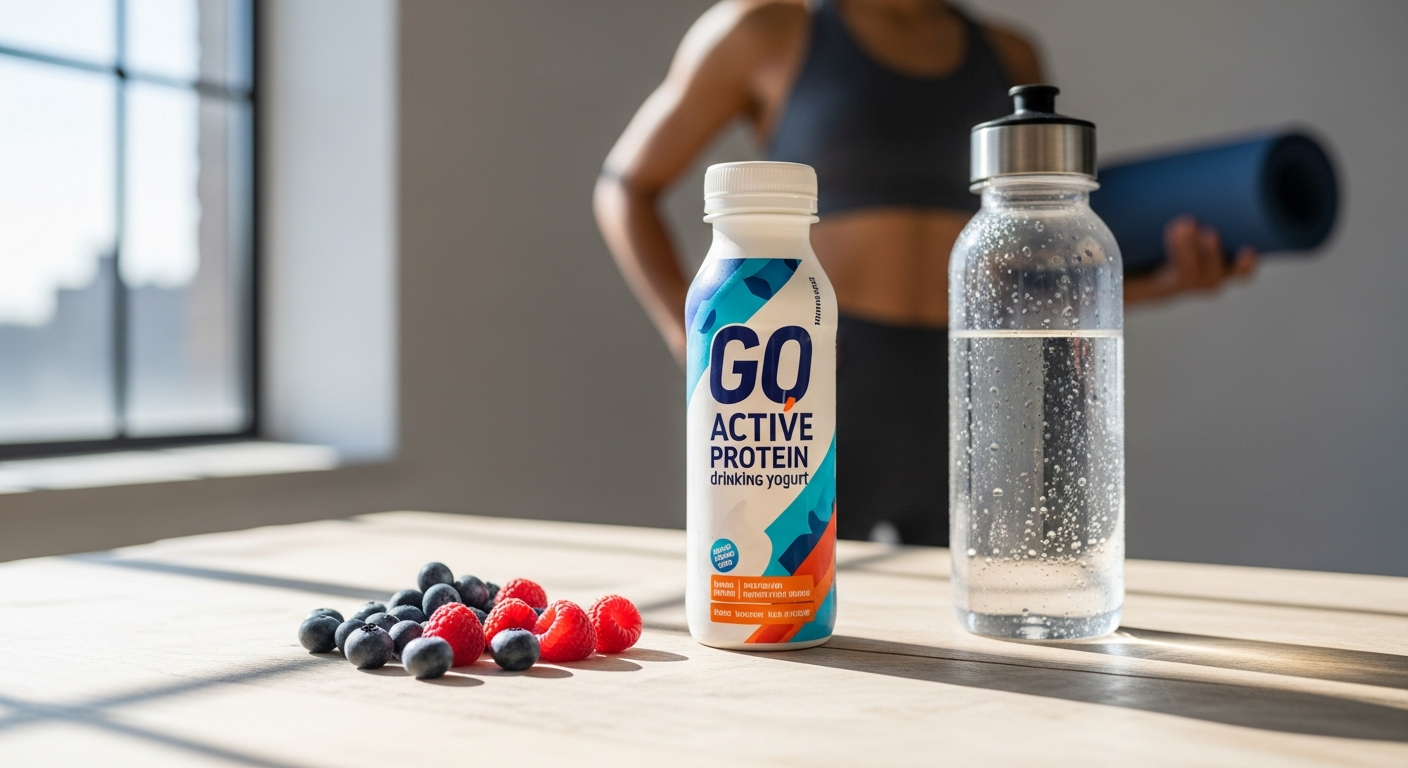
Protein shakes don't have to taste like cardboard, and here's the proof: Go Active Protein Drinking Yogurt has become the fastest-moving product in Polish supermarkets, with bottles vanishing from shelves faster than gym-goers can restock their fridges. I've watched this product transform from a niche health option into a mainstream staple, and the numbers back it up—fitness enthusiasts and busy professionals are choosing it over traditional protein drinks.
This isn't just another processed convenience food masquerading as nutrition. The Go Active Protein Drinking Yogurt represents a genuine shift in how we approach post-workout recovery and daily protein intake. With 18 grams of protein per bottle, zero added sugar, and a price point that won't drain your gym membership fund, it's become the practical answer to the age-old question: how do I get quality nutrition when life gets hectic?
What Makes Go Active Protein Drinking Yogurt Stand Out From Regular Yogurt
Standard yogurt sits in the fridge waiting for a spoon. Go Active Protein Drinking Yogurt walks out the door with you. The distinction goes far deeper than portability, though. With 18 grams of protein per 230-gram bottle, this beverage delivers substantially more protein than regular yogurt options, which typically max out around 8-10 grams per serving.
The texture engineering here deserves real attention. Most drinking yogurts end up thin and watery, leaving your mouth unsatisfied. Go Active maintains a creamy, thick consistency without any fruit chunks—a balance that requires careful formulation. That smooth mouthfeel rivals traditional spoonable yogurt despite being engineered specifically for drinking. You're getting satiety from a beverage, which changes the post-workout experience entirely.
The ready-to-consume format eliminates friction from nutrition. No blender needed. No powder mixing. No cleanup. Grab the bottle, open it, drink it. This simplicity proves especially valuable during the critical post-workout window when your body's primed for recovery but your motivation for meal preparation has vanished.
The Nutritional Breakdown: What You're Actually Consuming
Each 230-gram bottle contains roughly 165-170 calories, making this a relatively compact package of macronutrients. That 18-gram protein payload forms the centerpiece of the nutritional profile, supporting muscle protein synthesis during recovery phases. The amino acid composition derives from milk and milk proteins, providing the complete amino acid spectrum your muscles require for repair and growth.
The sugar situation deserves clarity. This product contains zero added sugar—a significant selling point for consumers managing blood glucose or reducing overall sugar consumption. Instead, the formulation relies on oligofructose and sucralose as sweetening agents. Oligofructose acts as a prebiotic fiber, supporting digestive health, while sucralose provides sweetness without calories.
Compared to protein powders requiring mixing with liquid, Go Active offers superior convenience without sacrificing absorption rates. The yogurt cultures and milk-based foundation create a naturally digestible format that your system processes efficiently. The liquid state actually accelerates delivery of amino acids to muscles during that critical post-workout window, making the drinkable format functionally superior to solid yogurt for immediate recovery needs.
Flavor Variety and Taste Experience: Beyond Vanilla Monotony
Three primary flavors dominate the Go Active lineup: strawberry, banana, and mango. This variety matters more than casual consumers realize. Taste fatigue kills supplement adherence faster than any other factor. When your recovery nutrition tastes genuinely good rather than medicinal, you'll actually drink it consistently.
The flavor quality stands notably above typical protein beverage standards. Natural flavoring components contribute authentic taste that avoids the artificial edge plaguing competitor products. Strawberry delivers genuine berry notes. Banana brings smooth, natural sweetness without the plastic quality of artificial banana flavoring. Mango offers tropical brightness that makes recovery feel less like a chore and more like a treat.
Consumer satisfaction ratings consistently highlight flavor consistency and palatability as major strengths. Regular users report that Go Active tastes so good they'd drink it even if it offered zero nutritional benefit—though obviously the protein content makes it genuinely functional. The flavor profiles also allow for customization. Some people mix Go Active with granola or berries for a thicker snack experience, while others enjoy it straight from the bottle.
The Affordability Factor: Premium Nutrition Without Premium Pricing
Biedronka's competitive pricing strategy places Go Active in the accessible protein beverage market. Similar Go Active protein yogurts retail around 2.79 PLN per 150-gram package, positioning the 230-gram drinking yogurt at an exceptionally attractive price point compared to specialty supplement retailers.
Breaking down cost per gram of protein reveals the real value. At approximately 2-3 PLN per bottle with 18 grams of protein, you're paying roughly 0.11-0.17 PLN per gram of protein. Compare that to premium protein powders costing 0.30-0.50 PLN per gram, and the economics become immediately apparent. This product democratizes high-protein nutrition, removing the financial barrier that once made protein supplementation seem exclusively for committed athletes with disposable income.
Biedronka's strategic positioning of Go Active as an affordable functional food drives accessibility across different income segments. This isn't a luxury product. It's accessible nutrition positioned for mainstream Polish consumers, making it genuinely inclusive for people managing tight budgets while maintaining fitness goals.
Artificial Sweeteners: The Conversation Dietitians Are Having
Sucralose content in Go Active demands an honest discussion. Scientific research on sucralose safety generally indicates it's well-tolerated at typical consumption levels. The sweetener has undergone regulatory approval across multiple jurisdictions and doesn't accumulate in body tissues like some older sweeteners did.
That said, emerging research suggests nuance worth considering. Some studies indicate potential effects on carbohydrate metabolism and insulin response, particularly with regular, high-volume consumption. Gut microbiota considerations represent another area where long-term implications remain somewhat uncertain. Your intestinal bacteria influence everything from nutrient absorption to immune function, and artificial sweeteners can shift microbial populations in ways we're still fully understanding.
Recommended consumption frequency emphasizes moderation. One or two bottles daily appears well within safe parameters. However, if you're consuming five bottles weekly plus other artificially sweetened beverages, that cumulative exposure warrants individual assessment. Some people tolerate artificial sweeteners beautifully; others experience digestive effects or cravings shifts with regular consumption. Pay attention to how your own body responds.
Try Go Active Protein Drinking Yogurt today and experience the recovery difference for yourself.
Post-Workout Recovery: Why Athletes Are Choosing This Over Shakes
The post-workout window represents a brief period when your muscles are primed for protein delivery and amino acid uptake. This is when your body absorbs nutrients most efficiently, making recovery timing genuinely matter. Go Active's liquid format accelerates delivery compared to powder shakes requiring mixing, allowing amino acids to reach muscles faster.
Protein timing and muscle protein synthesis optimization depend partly on convenient accessibility. If recovery nutrition requires five minutes of mixing, most people simply skip it after intense training sessions when convenience becomes paramount. Go Active eliminates that friction entirely. Grab the bottle from your gym bag, drink while changing clothes, and recovery has already begun.
The hydration component adds genuine value beyond protein content. Traditional shakes made from powder require additional liquid preparation, ultimately adding bulk and weight to what you're carrying. Go Active provides both protein and hydration in a single, portable format that occupies minimal space in your gym bag. That liquid foundation also means your digestive system isn't processing a thick, heavy shake when it should be directing resources toward muscle repair.
Real-world usage scenarios reveal practical advantages. At the office between meetings, you can drink Go Active discreetly without drawing attention or requiring dishes afterward. During commutes, it fits naturally into daily routines. While traveling, it provides reliable recovery nutrition without the hassle of powder management or requiring access to blenders.
Integrating Go Active Into Different Fitness Goals
Muscle building and strength training protocols benefit from Go Active's protein concentration. After heavy lifting sessions, consuming 18 grams of quality protein within 30-60 minutes supports muscle protein synthesis and strength adaptations. The convenient format makes consistent post-workout nutrition achievable even on chaotic training days.
Weight loss and calorie-controlled nutrition plans find Go Active particularly valuable. At 165-170 calories per bottle with substantial protein content, it delivers satiety without excessive calories. The appetite-suppressing effects of protein help manage overall daily intake, making weight management goals more sustainable.
Endurance training and sustained energy support represent another application area. While endurance athletes traditionally focus on carbohydrates, protein plays an important recovery role. Go Active provides accessible recovery nutrition for runners, cyclists, and endurance athletes managing multiple training sessions throughout the week.
General wellness and daily protein intake maintenance benefit from regular Go Active consumption. Not everyone trains intensely, but most people maintain protein intake goals for overall health. Go Active offers a flavor-varied, convenient way to bridge protein gaps in regular diets, making functional nutrition feel less like obligation and more like normal eating.
Meal replacement potential exists, though Go Active works better as a supplement than sole meal substitute. Combined with whole-grain toast, a banana, or a handful of nuts, one bottle creates a legitimate post-workout meal. Customized consumption timing based on training intensity and goals ensures you're using Go Active strategically within your broader nutrition plan rather than randomly throughout your day.
Why Biedronka Shelves Can't Keep This Product in Stock
Demand patterns surrounding Go Active reveal genuine market enthusiasm rather than passing trend. Shelves empty quickly regardless of promotional activity, indicating organic word-of-mouth momentum driving sales. Social media influence amplifies this effect, with fitness influencers and regular gym-goers sharing positive experiences that spread through connected communities.
Biedronka's visibility strategy and promotional positioning place Go Active prominently within stores, but the real driver remains consumer loyalty and repeat purchase behavior. People buy one bottle, experience the quality and convenience, and return consistently. That behavior pattern explains the constant inventory challenges.
Market positioning against international protein beverage brands reveals Go Active's competitive strength. While premium imported protein drinks sit on shelves at premium prices, Go Active captures that quality-conscious segment while maintaining accessibility. Consumers recognize the value proposition: comparable quality at substantially lower cost.
Supply chain challenges and inventory management reflect the product's authentic popularity rather than marketing hype. Biedronka struggles to stock enough inventory because actual demand exceeds supply projections. This growth trajectory suggests expansion opportunities, though current supply constraints indicate the company is already scaling production to meet demand.
The Processed Food Conversation: When Convenience Becomes a Compromise
Go Active represents a processed food in the technical sense—ingredients undergo transformation beyond their natural state. The production methodology combines milk proteins, yogurt cultures, fruit components, and sweetening agents through controlled industrial processes. Understanding this reality proves important for making intentional consumption choices.
Ultra-processed classification sparks legitimate debate among nutritionists. Go Active sits somewhere in the middle ground: more processed than plain yogurt, less processed than many convenience foods. The ingredient list remains relatively short and comprehensible, lacking the extensive chemical additives that characterize ultra-processed foods.
Expert recommendations emphasize frequency and portion control rather than absolute avoidance. Using Go Active as a strategic supplement works beautifully. Relying on it as your primary protein source while neglecting whole foods creates nutritional imbalance. The smartest approach combines Go Active's convenience with whole-food nutrition, using processed convenience strategically rather than exclusively.
Whole-food alternatives like Greek yogurt, cottage cheese, and fresh dairy provide comparable nutrition without processing. However, they also require more time, refrigeration management, and preparation. The reality is that supplements exist because whole-food nutrition doesn't always fit real life. Go Active acknowledges this reality and solves the problem elegantly.
Quality standards and regulatory compliance in Poland ensure you're consuming a legitimate product meeting established safety protocols. Biedronka maintains rigorous quality control, and Go Active products undergo the same testing and safety verification as any regulated food product. The processing that occurs serves functional purposes rather than representing shortcuts or quality compromises.
Real Consumer Experiences: What Biedronka Shoppers Actually Think
Customer reviews and satisfaction ratings for Go Active consistently rank favorably across platforms where Polish consumers share product feedback. People appreciate the taste, nutritional value, and convenience equally. Negative reviews remain remarkably rare, typically addressing personal preferences rather than product failures.
Common use cases reveal authentic integration into daily routines. Post-workout recovery dominates the consumption pattern, but office workers also report drinking Go Active between meetings for midday protein boosts. Parents describe giving it to teenage athletes after training sessions. Busy professionals mention using it on hectic mornings when breakfast preparation seems impossible.
Taste preferences show interesting patterns. Strawberry and mango typically rank as favorites, with banana appealing to consumers specifically seeking milder flavor profiles. Some people return to the same flavor consistently, while others rotate through options to prevent taste fatigue.
Comparison feedback against competitor products highlights Go Active's balanced positioning. It tastes better than cheaper alternatives and costs less than premium imported options. This sweet spot—quality meeting affordability—explains much of the product's appeal and consumer loyalty.
Price perception remains overwhelmingly positive. Consumers consistently report surprise at how affordable the product remains given its nutritional quality. This creates genuine willingness to repurchase and recommend to friends and family, generating organic growth that no marketing budget could achieve independently.
Demographic insights show Go Active appeals across age groups and fitness levels. Young athletes stock their fridges with multiple bottles. Older adults appreciate the convenience factor and protein support for maintaining muscle mass with age. Casual fitness enthusiasts and serious athletes both recognize value. This broad appeal across demographics explains the consistent shelf-emptying phenomenon.
Potential improvements and customer suggestions tend toward minor refinements rather than fundamental changes. Some consumers request larger bottle sizes. Others suggest additional flavor options. A small segment expresses interest in lower-calorie versions, though the current formulation already maintains impressive caloric efficiency.
Making Your Move: Is Go Active Protein Drinking Yogurt Right for Your Routine?
The Go Active Protein Drinking Yogurt has earned its spot as Poland's fastest-moving protein beverage for solid reasons. It delivers impressive nutritional value at a price point that makes high-protein nutrition accessible to everyone, from serious athletes to casual fitness enthusiasts. The convenience factor alone—grab, drink, recover—makes it genuinely practical for real life, not just theoretical nutrition plans.
That said, this product shines brightest when used strategically. It's an excellent post-workout recovery option, a legitimate meal supplement for busy days, and a flavor-varied alternative to monotonous protein shakes. The artificial sweetener conversation is worth having with yourself, particularly if you're consuming multiple bottles weekly. Moderation and balance remain the cornerstone of smart supplementation.
Ready to experience what's causing the Biedronka shelves to empty? Start with a single bottle of your preferred flavor—strawberry, banana, or mango—and notice how it fits into your recovery routine. Whether it becomes a daily staple or an occasional recovery boost depends entirely on your goals, but one thing's certain: you'll understand why this product has captured the attention of Poland's fitness community.
Get your Go Active Protein Drinking Yogurt now and join thousands of satisfied Polish consumers.

Leave a Reply