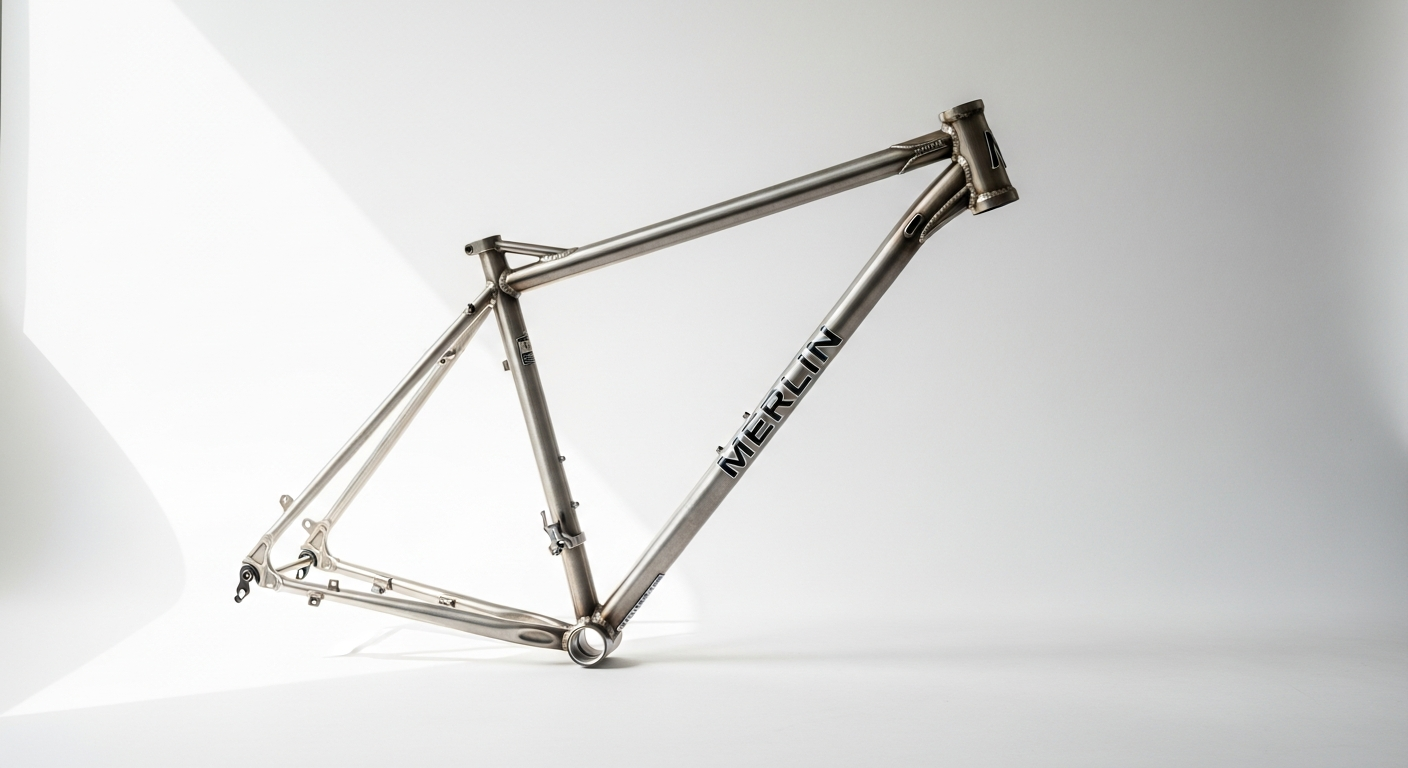
Steel frames are experiencing a renaissance in the mountain biking world—and for good reason. If you're serious about building a bike that'll feel as good on mile 50 as it does on mile one, the material you choose matters enormously. The Merlin Malt 725 has quietly become the secret weapon for riders who refuse to compromise between comfort, durability, and that intangible soul that only steel can deliver.
Merlin Cycles, the UK's trusted online bike shop, has spent years perfecting the Malt 725, and its reintroduction with modern geometry marks a turning point for steel hardtail enthusiasts. This isn't your vintage steel bike—it's engineered for contemporary trail demands while honoring the material's legendary comfort characteristics. Whether you're sourcing a frame for a complete custom build or considering a pre-assembled model, understanding what makes this platform special will transform how you approach your next bike project.
Discover the Merlin Malt 725 and start building your steel hardtail today.
Why Steel Hardtails Are Making a Comeback in 2026
The resurgence of steel in modern mountain biking and why durability matters
Steel never really left the conversation among serious riders, but it's experiencing renewed momentum as cyclists recognize what marketing departments have long tried to obscure: materials matter. Unlike aluminum's brittleness or carbon's complexity, steel absorbs punishment year after year without compromise. A steel frame doesn't just survive rough treatment—it improves with it, developing character and reliability that composite materials struggle to match.
Comfort advantages of Cr-Mo steel over aluminum and carbon alternatives
Reynolds 725 Cr-Mo steel excels at one thing competitors cannot replicate: damping vibration naturally. The material's molecular structure absorbs trail chatter and transmits it differently to your body than aluminum or carbon ever could. Aluminum rings under impact; carbon sometimes transmits shocks in jarring, unpredictable ways. Steel flexes with intent, smoothing out the rough edges of rocky terrain and technical descents. For riders who spend eight hours or more in the saddle, this difference becomes visceral—your hands stay fresher, your back complains less, and the bike feels like an extension of your body rather than a tool fighting against it.
Long-term value proposition: repairability and lifespan compared to other frame materials
A dented aluminum frame requires replacement. A cracked carbon frame ends in the dumpster. A bent steel frame? It gets straightened, re-painted if necessary, and continues performing for another decade. This isn't hypothetical—it's the foundation of steel's economic argument. When you factor in the cost of repair versus replacement, the material's repairability against impact damage, and the genuinely low likelihood of catastrophic failure, steel frames offer value that spreadsheets don't always capture. You're not just buying a bike; you're investing in something that can be maintained and restored rather than discarded.
The appeal to bikepacking and adventure riding communities
Bikepacking isn't about speed; it's about carrying your life into places where bike shops don't exist. Steel's strength-to-weight ratio makes it ideal for heavy loads. Its ability to be repaired with basic tools and minimal specialized knowledge appeals to riders who venture into remote terrain. The Malt 725 specifically attracts adventure cyclists because it tolerates the abuse of loaded touring, responds well to varied terrain, and offers the comfort required for multi-day missions where fatigue compounds with every mile.
How steel geometry complements contemporary trail design
Modern trails are faster, more intentional, and better-designed than their predecessors. They demand precision handling and predictable geometry rather than the slack, slack, long proportions that became fashionable. Steel's inherent compliance actually pairs beautifully with modern geometry because the frame's natural dampening compensates for aggressive angles. You get contemporary trail responsiveness without the harshness that makes aggressive aluminum or carbon hardtails punishing on eight-hour days.
Reynolds 725 Cr-Mo Tubing: The Heart of the Malt 725's Performance
What makes Reynolds 725 steel different from standard chromoly
Reynolds 725 isn't the cheapest chromoly available. The company's proprietary tube-forming process creates material with specific properties: managed flexibility, consistent strength, and predictable fatigue resistance. Standard chromoly varies in composition; Reynolds 725 is engineered. This distinction matters when you're building a frame meant to last decades under varying conditions. The tubing diameter, wall thickness, and alloy composition are optimized for mountain biking rather than adapted from road or BMX applications.
Ride quality characteristics: damping, vibration absorption, and feedback
The Malt 725 doesn't feel numb. Unlike some aluminum frames that either transmit every pebble or isolate you entirely, Reynolds 725 provides calibrated feedback. You feel what the trail is doing, but you're not fatigued by it. The tube's flexibility at the molecular level converts shock energy into motion rather than storing it as vibration. On a rocky climb, this translates to more predictable tire contact. On a fast descent, it means your body absorbs impact through the frame's compliance rather than through your wrists and shoulders.
Strength-to-weight ratio and why 3.1kg is competitive for a steel hardtail frame
Three point one kilograms for a complete hardtail frame is genuinely competitive. For perspective, many aluminum hardtails weigh 2.9–3.3kg. The difference matters far less than marketing suggests—a 200g variance between frames becomes meaningless when you factor in component choices and rider fitness. The Malt 725's weight reflects material choice, not engineering compromise. You're getting full strength, full comfort, and full durability without excessive mass. That's the hallmark of a well-designed steel frame.
Durability under stress and resistance to fatigue
Steel frames fail slowly and predictably. You'll see paint cracking or corrosion beginning before structural compromise occurs. Aluminum and carbon fail suddenly—you hit something wrong, and the frame is finished. Steel can be bent, straightened, re-welded if necessary, and continue functioning. This doesn't mean the Malt 725 is indestructible, but it does mean damage typically signals maintenance rather than replacement. The material's resistance to impact fatigue is well-documented; a steel frame can handle repeated stress cycles far longer than composite alternatives before showing signs of weakness.
How the material choice influences frame longevity and maintenance requirements
Steel requires protection from corrosion—paint integrity matters. This is the primary maintenance consideration. Beyond that, steel frames are remarkably low-maintenance. No frame flex worries, no delamination risks, no mysterious creaks from joint failures. A quality paint job, occasional touch-ups, and basic rust prevention extend frame life indefinitely. Many steel hardtails outlast multiple drivetrain generations and suspension updates. The Malt 725's design supports this reality; external cable routing and straightforward geometry mean nothing within the frame itself is exotic or difficult to service.
Geometry Deep Dive: Is the 67-Degree Head Angle Right for You?
Understanding the 67-degree head angle and what it means for handling
A 67-degree head angle positions the fork slightly slack relative to what road geometry offers (typically 73 degrees) but considerably steeper than aggressive modern trail bikes (often 65 degrees or less). This angle represents a deliberate middle ground. It provides stability on technical descents—your front wheel sits more directly beneath you—without creating the commitment required by slack-geometry designs. When climbing, the steeper angle improves control and keeps weight forward, making it easier to maintain traction on steep pitches without intentional weight management.
Compatibility with 120mm to 140mm fork travel options
The frame is optimized for 120mm forks but tolerates 140mm without major geometry shifts. This flexibility matters. A 120mm fork creates a specific ride feel—playful, responsive, quick-turning. A 140mm fork settles the bike down, increases wheelbase stability, and smooths large impacts. The Malt 725 accepts both without requiring geometry compromises. Riders upgrading from shorter to longer travel don't sacrifice handling; they gain capability for more technical terrain while maintaining the frame's inherent character.
Wheel size flexibility: 29-inch versus 27.5+ performance characteristics
Twenty-nine-inch wheels roll over obstacles efficiently and maintain momentum across rolling terrain. They feel faster, less fiddly, more predictable at speed. Twenty-seven-point-five-plus wheels (29-inch diameter with wider tires) offer a middle ground—better rolling than traditional 27.5, tighter turning radius than 29, and increased tire volume for cushioning. The Malt 725 handles both configurations without geometry penalties. Your choice becomes about riding preference rather than frame limitation. Fast and efficient favors 29; technical and playful favors 27.5+.
Head tube angle implications for climbing control and technical descents
Climbs reward geometry that keeps riders' weight centered. The 67-degree head angle achieves this naturally. Your front wheel won't wash out under aggressive climbing load, and your body position feels instinctively balanced. Descending, the angle keeps the front wheel committed without requiring the slack geometry that demands constant active input. You can relax into technical sections rather than arm-wrestling the bike through them. This balance—competent climbing without sacrificing descending capability—is precisely what makes the 67-degree angle appropriate for all-mountain riding.
Reach, stack, and chainstay geometry for different riding disciplines
The Malt 725's geometry prioritizes versatility over specialization. Reach is moderate, stack is balanced, and chainstays are manageable length. Cross-country riders won't find it excessively slack. Trail riders won't find it excessively steep. This intentionality appeals to riders who mix disciplines—morning XC efforts, afternoon technical exploration, weekend bikepacking missions. The geometry supports all three without demanding compromise on any.
How modern geometry updates compare to older hardtail designs
Previous steel hardtails often featured steeper head angles (69–71 degrees) and longer chainstays designed for a different era of trail design. The Malt 725's geometry reflects what trail builders and riders have learned over the past decade. It's lower in the front end than vintage designs, longer in the wheelbase, and more confident on modern trail features. This is significant: the frame isn't a retro throwback; it's a contemporary platform that happens to use classic material.
Frame Specifications That Matter: A Technical Breakdown
English threaded 73mm bottom bracket and component compatibility
An English-threaded 73mm bottom bracket is the standard on quality mountain bikes. This specification ensures massive parts availability and straightforward serviceability. You can source replacement bearings anywhere, swap cranksets without special tools, and maintain the drivetrain without exotic requirements. This standardization is worth celebrating—it means the frame supports decades of component upgrades without compatibility concerns.
External cable routing versus internal: maintenance and customization implications
External routing is visible but serviceable. You can access cables easily, replace them quickly, and upgrade components without frame disassembly. Internal routing looks cleaner but complicates service. The Malt 725's external routing reflects practical engineering. Mud and debris remain exposed rather than trapped, cables pull smoothly, and troubleshooting is straightforward. For an adventure-oriented platform, external routing is the right choice.
Stealth dropper post routing for clean aesthetics and reliability
Stealth routing hides the dropper post's cable beneath the frame's exterior. This protects the cable from impacts, improves aesthetics, and maintains the frame's visual integrity. The Malt 725 supports modern dropper posts without compromise. Whether you run a 100mm or 150mm post, integration is clean and reliable.
Boost 148mm axle spacing and rear wheel options
Boost spacing (148mm standard) has become the industry standard for hardtails. This measurement defines rear axle width and ensures access to the broadest selection of wheels and hubs. The Malt 725's Boost compatibility means you can source wheels from multiple manufacturers without searching for specialty components. This standardization represents genuine freedom rather than lock-in.
Bottle cage mounting limitations and workarounds for adventure builds
Here's where the Malt 725 shows minor limitations: bottle cage mounts are sparse. A bike marketed for adventure riding benefits from multiple water-carrying options, and the Malt 725 forces workarounds—frame bags, handlebar packs, or water bottle cages on seat posts. This isn't a deal-breaker, but it's worth acknowledging for riders planning multi-day expeditions where water capacity matters. Third-party mounting solutions exist and function well; the factory design simply prioritizes frame aesthetics over adventure practicality.
Tire clearance and frame capacity for various tread widths
The Malt 725 accommodates generous tire widths—up to roughly 2.6 inches depending on rim choice. This capacity supports modern tire philosophy: wider tires offer better traction, improved comfort, and obstacle rollover capability. The frame's design doesn't impose restrictive clearances that limit your options. You can run aggressive knobby tires or fast-rolling narrow options without modification.
Custom Build vs. Complete Bike: Finding Your Price Point
Frame-only pricing ($428 USD) and what you'll need to complete the build
At $428 USD for the frame alone, you're acquiring a genuine foundation for a custom build. The complete cost equation requires calculating fork ($200–600), wheels ($400–1000), drivetrain ($400–800), brakes ($200–400), bars and stem ($100–300), saddle ($100–300), and various hardware. Total build cost ranges from $1,500 to $3,500+ depending on component tier. Frame-only purchasing appeals to riders who possess spare parts, understand component compatibility, or want complete control over their build quality.
Complete bike options: Merlin Malt 725 Steel NX (£2,199) and SLX models (£1,599–£2,299)
Merlin offers pre-assembled builds, with pricing ranging from approximately $2,100 USD (street deals) to $2,934 USD (full retail). The NX build emphasizes value—SRAM NX drivetrain, competent components throughout, reasonable wheels. The SLX build steps up to Shimano's mid-range group, improving shifting and brake performance. At $2,100–2,300, complete bikes represent genuine value, particularly for first-time builds where assessing compatibility feels overwhelming.
Component tier comparisons and where to prioritize spending
Drivetrain and brakes are where component tier matters most. Spend here. Wheels and tires significantly impact ride feel. Invest appropriately. Bars, stems, and saddles are personal and easily changed later. Don't overspend. Forks are critical; resist buying entry-level suspension if budget allows a mid-range option. The Malt 725 pairs well with 120–140mm forks in the $300–500 range. Wheels in the $500–800 range offer legitimate value. This tiering approach builds a balanced, capable bike rather than one that excels in specific areas while suffering elsewhere.
Build your custom Malt 725 at Merlin Cycles and choose components that match your riding style.
Hidden costs when building from a frame versus buying complete
Frame-only builders face costs complete bike purchases absorb: shipping (often higher for frames because they require careful packaging), warranty and support (complete bikes include manufacturer backing), and assembly labor if you lack tools or expertise. Professional wheel building, drivetrain assembly, and brake bleeding—tasks that come integrated with complete bikes—cost money when outsourced. Frame purchasing saves money only if you execute assembly competently or already possess necessary components.
Resale value and long-term investment considerations
Steel hardtails hold value remarkably well. A Malt 725 built three years ago still commands $1,200–1,500 on the secondhand market if maintained responsibly. This retention reflects durability and reputation. Complete bikes depreciate faster because resale value depends on component desirability; a frame maintains value independent of trendy drivetrains or suspension. From a pure investment perspective, frame-only purchasing creates better long-term economics despite higher initial assembly costs.
Where to find deals and seasonal pricing on Merlin Cycles builds
Merlin Cycles runs seasonal sales, typically around autumn (August–October) and spring (March–April). Black Friday brings discounts. Off-season clearance (January, July) offers stock reduction pricing. Email subscription lists announce flash sales. The frame itself rarely discounts, but complete builds fluctuate based on component availability and stock rotation. Patience—waiting for sales—can save $300–500 on complete builds without sacrificing quality.
Real-World Riding: Control, Playfulness, and Trail Versatility
How the Malt 725 performs on climbs and technical terrain
Climbs reward geometry that keeps riders centered and engaged. The Malt 725 delivers. Weight distribution feels natural; the bike doesn't demand aggressive body movements to maintain traction. On technical sections requiring precise foot placement and weight management, the geometry and material compliance work together. You receive feedback about what the terrain demands without fighting the bike's inherent traits. Rocky climbs, rooty pitches, and sustained grades all feel manageable rather than punishing.
Responsiveness and handling characteristics across different trail types
The 67-degree head angle creates stability without sluggishness. The bike turns predictably, accelerates responsive to input, and inspires confidence in varied conditions. Fast, flowing terrain rewards the geometry's efficiency. Technical and chunky terrain appreciates the compliance and traction. Neither category dominates—instead, the Malt 725 feels competent across the spectrum. This is the entire point of moderate geometry: specialization yields to consistency.
Suitability for cross-country, adventure, and bikepacking applications
XC riders appreciate the lightweight frame and efficient geometry. Adventure riders love the durability and capacity. Bikepacking communities recognize the strength required for loaded touring. The Malt 725 wasn't designed for one specific discipline; instead, it was designed for riders who blend disciplines. Your commute might mix gravel sections, single-track climbs, and pavement. Your weekends might range from local trail days to multi-day adventures. The Malt 725 adapts to all these roles without requiring different bikes.
Feedback from Merlin Cycles staff and community reviews
Merlin's own staff describe the Malt 725 as "fun, playful and responsive." Community feedback reinforces this assessment. Owners consistently praise comfort on long rides, traction on technical terrain, and the material's inherent character. Complaints are rare and typically address paint durability rather than fundamental design. Within the hardtail community, the Malt 725 has cultivated a reputation as a genuine all-rounder that doesn't compromise core performance for versatility.
Multi-day touring capability and comfort over long distances
Steel's natural compliance transforms long rides from endurance efforts into explorations. Your hands don't tingle after eight hours. Your lower back doesn't revolt on mile fifty. The material absorbs trail imperfections in ways that preserve your body's energy for navigation and climbing rather than impact management. Combined with modern geometry that keeps you positioned correctly, the Malt 725 becomes genuinely comfortable for extended touring. This comfort advantage grows with duration—day one won't feel radically different on steel versus aluminum, but day three will.
Limitations for aggressive, slack-geometry trail riding
The Malt 725 won't satisfy riders chasing a deliberately slack, playful geometry optimized for technical terrain and large impacts. The 67-degree head angle is moderate, not aggressive. The geometry prioritizes stability over trickiness. If your riding emphasizes manuals, drops, and tricks-oriented trail play, this frame isn't your target. Its strength lies in all-mountain exploration and trail riding that rewards precision and efficiency rather than aggression and commitment.
What Riders Should Know Before Purchasing
Paint quality considerations and finish durability concerns
Steel requires quality paint to resist corrosion. Some owner reports mention paint durability concerns on the Malt 725—chipping under impact, showing wear faster than expected on premium hardtails. This isn't catastrophic; the underlying frame remains functional. However, maintaining a quality finish requires attention. Touching up chips promptly, protecting the frame from rock strikes, and refreshing the finish periodically extend frame life and prevent corrosion from establishing. If flawless aesthetics matter, factor in potential repainting costs.
Limited bottle cage mounts for adventure-focused riders
Adventure bikes traditionally feature multiple bottle cage options. The Malt 725 prioritizes clean aesthetics over capacity, limiting cage mounts to one or two positions. Riders planning extended travel need alternative water-carrying solutions: frame bags, handlebar packs, or secondary mounting approaches. This isn't a fundamental flaw—plenty of adventure bikes use similar strategies—but it's worth acknowledging if water capacity drives your build decisions.
Geometry trade-offs: versatility versus specialization
Every design choice involves trade-offs. The Malt 725's moderate geometry excels at many things but doesn't dominate any single category. It won't climb like a dedicated XC bike or descend like an aggressive trail bike. If your riding emphasizes one specific discipline, a specialized frame might suit you better. For mixed riding, this compromise becomes strength. Recognize the trade-off, accept it consciously, and build accordingly.
Frame compatibility with various drivetrain and suspension options
The Malt 725 supports modern standards comprehensively: Boost spacing, English threaded bottom bracket, standard cable routing. You can run SRAM or Shimano drivetrains, any modern fork, and any standard components. This compatibility ensures future-proofing. You won't be locked into proprietary solutions or forced to use specific manufacturers. This standardization is genuinely valuable for long-term ownership.
Warranty, support, and after-sales service from Merlin Cycles
Merlin Cycles provides comprehensive customer support. Warranty details vary by purchase model (frame-only versus complete), but the shop's reputation for responsiveness and problem-solving is well-established. UK-based riders benefit from direct support. International buyers have slightly longer response times but equally committed service. For a frame you're committing to for years, having reliable manufacturer support matters.
Common customization paths and upgrade recommendations
Most Malt 725 owners eventually upgrade wheels—stock complete bike wheels are functional but underspectacular. Forks get swapped as technology advances. Drivetrains follow normal progression: start mid-range, upgrade to premium components as original gear wears. Bars, stems, and saddles change based on comfort preferences. The frame itself rarely requires modification; external cable routing and modern standards support all these upgrades without intervention.
The Steel Hardtail Advantage: Long-Term Ownership
Repairability and frame longevity compared to composite materials
A bent steel frame gets straightened. A cracked aluminum frame gets recycled. Delaminated carbon gets abandoned. Steel's repairability transforms your relationship with the bike. Accidents stop being catastrophic failures and become maintenance events. A frame can be rewelded, repainted, and restored to original functionality. Over a decade, this difference compounds. Many steel frames outlast their owners' interest in the sport, passing into second ownership with inherent value preserved.
Maintenance requirements specific to steel construction
Steel needs paint protection. That's the primary maintenance demand. Beyond that, the material demands remarkably little. No frame cracking concerns, no delamination worries, no mysterious flex developing over time. Annual inspection for corrosion, prompt paint touch-ups, and basic care extend frame life indefinitely. This simplicity appeals to riders who prefer mechanical understanding over mystery.
Upgrade paths and future-proofing your investment
The Malt 725's standardized components (Boost spacing, English threaded BB, modern cable routing) ensure compatibility with future upgrades. You won't face obsolescence. Forks evolve, drivetrains improve, suspension technologies advance—the frame accepts all these improvements without modification. This future-proofing justifies the initial investment. You're not just buying a bike; you're buying a platform that accepts decades of component evolution.
Community support and parts availability for the Malt 725 platform
Merlin's reputation creates a devoted community. Online forums, local shop support, and peer knowledge mean resources for the Malt 725 are readily available. Spare parts are accessible through standard channels. Troubleshooting questions have answers. This community support network provides genuine value when problems arise or questions emerge.
Resale potential and collector value of quality steel hardtails
Quality steel hardtails appreciate in certain markets. As aluminum environmental concerns grow and carbon complexity multiplies, steel gains collector appeal. A well-maintained Malt 725 will command respected resale prices years from now. This isn't an investment vehicle, but it does mean your money isn't entirely consumed by depreciation.
Environmental considerations: sustainability and material lifecycle
Steel is infinitely recyclable. Its production, while energy-intensive initially, creates material that never demands replacement or disposal. A frame lasting thirty years represents dramatically lower environmental impact than bikes requiring replacement every five to seven years. Philosophically and practically, steel offers the most sustainable material choice available to mountain bikers.
Your Path Forward: Making the Malt 725 Decision
The Merlin Malt 725 Steel Mountain Bike isn't a trend—it's a statement about what matters in modern mountain biking. Whether you're drawn to the Reynolds 725 tubing's legendary comfort, the versatile geometry that handles everything from rocky climbs to flowing descents, or the honest appeal of building something with your own hands, this hardtail delivers on multiple fronts.
The technical specs are compelling: Reynolds 725 Cr-Mo steel delivers compliance without weakness. The 67-degree head angle works beautifully for all-mountain exploration. The 3.1kg frame is genuinely competitive with aluminum alternatives. The $428 frame-only price point opens doors for custom builders who know exactly what they want. Complete bike options at $2,100–2,300 represent legitimate value for riders seeking simplicity.
Yes, there are minor quirks—paint durability and bottle cage placement aren't perfect—but they're far from deal-breakers when weighed against the overall package. The real question isn't whether the Malt 725 is good. It's whether a steel hardtail aligns with how you actually ride. If you value comfort over aggression, durability over trend cycles, and the satisfaction of a bike that improves with age, this platform deserves serious consideration. You'll spend money once and maintain it for decades, rather than replacing it every five years and watching your investment depreciate immediately.
Steel is making a comeback because riders have remembered what material science established decades ago: some things don't improve with complexity. The Malt 725 represents that philosophy perfectly—straightforward, durable, honest engineering that performs beautifully across varied terrain and disciplines. The frame doesn't fight you; it collaborates. It doesn't demand constant maintenance; it rewards reasonable care with consistent performance.
Explore the Merlin Malt 725 at Merlin Cycles and experience the steel hardtail revolution firsthand.
Leave a Reply