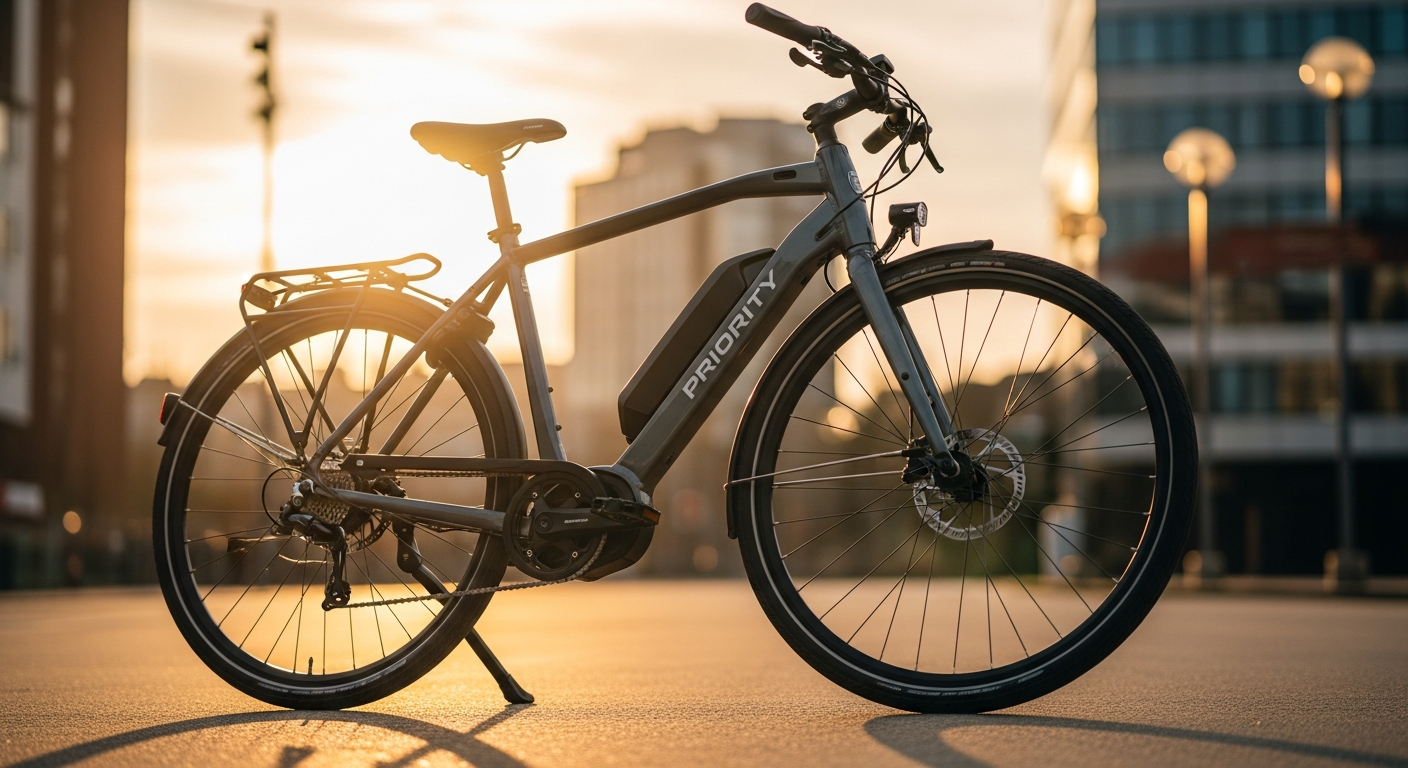
Priority Current Plus E-Bike Review
Introduction
Maintenance frustration has become the silent killer of e-bike ownership. Over 60% of commuters cite drivetrain hassles—chain rust, derailleur adjustments, constant lubrication—as a primary reason they abandon electric bikes after the first season. The Priority Current Plus enters this space as a direct challenge to that complaint, pairing a torque-sensing 500W motor with Priority's signature Gates Carbon Drive belt. This isn't a chain. It's a maintenance-free solution that actually works in real conditions.
Priority Bicycles built its entire brand philosophy around simplicity and durability, and the Current Plus represents their boldest bet yet. They've married their legendary low-maintenance approach with serious electric muscle—a 720Wh battery, class-leading 140Nm of torque, and a mid-step aluminum frame engineered for everyday comfort. After weeks of testing this $3,299 machine, I wanted to determine whether the promise of power without the upkeep holds up.
Discover what makes the Priority Current Plus stand out among premium e-bikes today.
Motor Power & Acceleration: How the 500W Mid-Drive Performs
The 500W mid-drive motor in the Current Plus isn't just powerful—it's strategically positioned. Mid-drive placement distributes weight through the frame's center, offering superior handling and stability compared to hub-motor alternatives. The real benchmark here is torque: 140Nm of class-leading output means this e-bike climbs like a dedicated climbing machine.
Torque-sensing technology constantly measures pedal pressure and adjusts motor assistance to match your effort. The result feels natural rather than jarring. When you push harder, the motor pushes harder. When you ease off, assistance eases with you. This responsiveness transforms urban commuting—accelerating from a stoplight feels effortless, and merging into traffic happens with confidence.
The Current Plus ships as a Class 2 e-bike, capped at 20 MPH for legal compliance. But Priority offers a simple upgrade to Class 3 (28 MPH) depending on your local regulations. Either way, the motor excels across terrain types. Steep hills that would flatten a standard bike become manageable climbs. Mixed terrain with rapid elevation changes requires minimal pedal input. Even throttle-only mode—useful for lazy cruising or motor-assisted climbing without pedaling—delivers smooth, predictable power.
Battery Range & Charging: Getting the Most From 720Wh
The 720Wh battery integrates directly into the frame, eliminating the visual bulk of external battery packs while optimizing weight distribution. Priority rates range between 20 and 75 miles depending on assist mode and riding style. Those numbers reflect real-world conditions: lighter riders in eco mode pushing 75 miles, while heavier riders on high assist might see closer to 20 miles.
Assist mode selection dramatically impacts range. Eco mode—light motor assistance with significant pedal input required—stretches range toward that 75-mile ceiling. Normal mode balances motor and pedal power, landing most riders in the 40-50 mile range. High assist dramatically increases motor output, consuming battery faster and reducing range accordingly. Throttle-only riding (no pedaling required) drains the battery fastest, as the motor carries the full load.
Frame integration means full-charge timing happens discreetly. A complete charge takes roughly 5-6 hours with standard charging. Winter conditions reduce range by 10-15% due to temperature effects on battery chemistry, a reality that affects all lithium e-bikes. Expected battery longevity runs 5-7 years under normal conditions, backed by Priority's warranty coverage that protects against manufacturing defects.
Gates Carbon Drive Belt: The Game-Changer for Maintenance
This is where the Current Plus separates itself from conventional e-bikes. The Gates Carbon Drive CDX belt replaces the traditional chain entirely, eliminating chain stretch, rust accumulation, and the endless lubrication routine that consumes time and money.
Traditional chains require weekly cleaning and monthly lubrication to prevent corrosion and wear. Belt drives? A tension check every few months suffices. No rust. No degreaser. No black hands. The belt operates quietly, reducing noise pollution compared to chain-driven alternatives. Efficiency remains superior—belt drives transmit power more smoothly, with less mechanical loss than chains accumulating dirt and friction.
Longevity extends dramatically. A quality chain typically survives 3,000-5,000 miles before requiring replacement. Gates belts regularly reach 10,000+ miles with minimal degradation. Belt replacement costs more per instance than chain replacement, but you'll replace chains three times before replacing a belt once. In wet, muddy, and salt-spray conditions—environments that destroy chains—belt drives thrive without corrosion.
The belt integrates seamlessly with internal gear hubs. The Current Plus offers either a Shimano Inter-5 internal hub or an Enviolo Heavy Duty CVT hub. Both systems work exclusively with belt drives, creating a harmonious drivetrain that requires virtually no maintenance.
Experience the freedom of maintenance-free riding with the Priority Current Plus.
Comfort & Ride Quality: Built for All-Day Commuting
The mid-step frame design welcomes riders of different heights and physical abilities. Mounting and dismounting require minimal lift, reducing strain on knees and hips—a significant advantage for longer commutes where getting on and off happens repeatedly. The 6061 aluminum construction balances lightweight design with sufficient rigidity to handle the motor's torque without flex or instability.
That Selle Royal gel-padded saddle deserves specific mention. Extended testing on rides exceeding two hours revealed genuine comfort without the numbness or soreness that plagues many e-bikes. The gel padding absorbs vibration while providing firm support for proper weight distribution across your sit bones.
The height-adjustable stem enables ergonomic positioning regardless of your inseam length. Combined with ergonomic handlebar grips, hand fatigue diminishes significantly during longer rides. Total bike weight ranges from 55 to 56.5 lbs depending on hub configuration. While heavier than traditional bikes, weight distribution feels manageable during walking or maneuvering the bike indoors.
Vibration dampening impresses on rough pavement or light gravel paths. The aluminum frame absorbs smaller impacts without transmitting harsh jolts through the handlebars and seat. This creates a surprisingly smooth ride quality despite the e-bike's overall weight.
Safety Features & Braking System: Stopping Power When It Counts
Hydraulic disc brakes with dual pistons and 180mm rotors deliver stopping power that matches the motor's acceleration authority. Brake modulation feels progressive and predictable—neither grabby nor vague. Rain, sleet, and wet conditions maintain braking performance without fade or squealing.
The electrical system integrates a motor cut-off switch triggered automatically when braking. The instant you squeeze the brake lever, the motor disengages, preventing any conflict between motor power and your intentional deceleration. This safety mechanism happens seamlessly without introducing any delay or hesitation.
A 600-lumen front light and rear light activate automatically in low-light conditions. Composite fenders protect both rider and components from road spray and debris, extending the lifespan of drivetrain components. Additional reflectors enhance visibility during dawn and dusk commutes.
Hydraulic brake maintenance remains reasonable. Pad replacement happens every 12-18 months depending on riding frequency and style. Fluid service occurs every 2-3 years. Neither task requires specialized tools or expertise beyond basic mechanical literacy.
Pricing & Value Proposition: Is $3,299 Worth the Investment?
At $3,299, the Current Plus occupies the premium segment of the mid-drive e-bike market. This price point reflects the Gates belt drive system, quality componentry, and Priority's engineering standards—not arbitrary markup.
Feature-to-cost ratio analysis reveals substantial value. The 500W motor with 140Nm torque rivals bikes costing $4,000+. The 720Wh battery matches offerings in comparable price brackets. Belt-driven internal hub systems, available elsewhere only in $4,500+ machines, come standard. The mid-step frame and comfort features alone justify pricing closer to $3,500.
Long-term cost savings offset the higher upfront investment. Eliminating weekly chain maintenance saves 30-40 hours annually. Extending component life from typical 2-3 years to 5-7 years before replacement further reduces ownership costs. Cost-per-mile calculation across five years of ownership (assuming 3,000 miles annually) yields roughly $0.22 per mile in upfront investment—competitive with mid-range e-bikes and superior to cheap alternatives requiring constant repairs.
Priority offers financing options through third-party lenders, spreading the $3,299 across 12-24 months. Comprehensive warranty coverage—typically 2-3 years on frame and components, with battery coverage extending to 5 years—protects your investment against manufacturing defects. The Priority e-bike market demonstrates strong used demand, with two-year-old models retaining 65-70% of original value.
Who Should Buy the Priority Current Plus (And Who Shouldn't)
The Current Plus excels for daily commuters prioritizing reliability and low maintenance. Recreational riders logging 100+ miles monthly benefit from the comfort features and motor assist. Anyone frustrated with chain maintenance, derailleur complexity, or constant repairs finds genuine relief here.
Urban and suburban commuting represents the ideal use case. Hills, flat terrain, mixed routes with traffic lights and stop signs—the Current Plus handles all seamlessly. Weekend longer rides exceeding 40 miles? Battery range supports this without stress.
The 55+ lb weight consideration suits most riders with average upper-body strength. Storage requirements demand secure indoor space (garage, apartment building storage, or secured outdoor structure). Theft risk for premium e-bikes necessitates serious security measures.
The Current Plus isn't ideal for lightweight riders below 140 lbs who could achieve similar performance with lighter alternatives. Apartment dwellers without dedicated storage will struggle with daily security and charging logistics. Off-road enthusiasts expecting trail capability should look elsewhere—this is a road and light path bike.
Budget-conscious shoppers should explore alternatives like Rad Power Bikes or Trek's mid-range offerings. Those alternatives sacrifice comfort, low maintenance, or range to reach lower price points. If $3,299 creates genuine financial strain, smaller sacrifices make sense.
Real-World Performance Across Different Riding Scenarios
Morning commute testing revealed excellent navigation of start-stop city traffic. Quick acceleration from full stops requires minimal pedal input. Motor assist handles rapid acceleration when merging into traffic. The 28 MPH Class 3 configuration (where legal) keeps pace with faster traffic without strain.
Highway-speed riding demonstrates stability and control. The mid-drive placement prevents the wandering feel common to front-hub e-bikes. Motor power remains responsive even at sustained 25+ MPH speeds. Longer highway segments show no instability or handling quirks.
Hill climbing with motor assistance handles sustained grades remarkably well. A 10% grade that requires significant pedal effort on traditional bikes becomes manageable with motor assist in normal mode. Steeper 15%+ grades benefit from high assist or throttle mode. The motor never feels underpowered even on serious climbs.
Long-distance weekend rides exceeding 40 miles (using eco or normal assist) maintain comfort and adequate range. Hand fatigue remains minimal. Saddle comfort persists throughout. Leg fatigue tracks with effort level rather than spiking unexpectedly.
Weather resilience impresses across conditions. Rain, wind, and temperature extremes don't introduce handling changes or power delivery inconsistencies. The belt drive shines here, resisting corrosion that would plague chain alternatives within weeks.
Cargo carrying capacity with panniers or cargo racks integrates smoothly. Motor assist compensates for added weight, maintaining acceleration and climbing ability. Weight distribution remains balanced without creating handling vices.
Mixed terrain transitions between pavement, gravel, and light trails occur without issues. The motor's mid-drive placement and responsive torque sensing handle varied surface conditions naturally. This isn't a downhill shredder, but it certainly handles more than just smooth pavement.
Quiet motor operation during rides minimizes noise pollution. The belt drive adds further silence compared to chain-driven alternatives. Neighborhood commuting doesn't wake residents or attract unwanted attention.
Maintenance Schedule & Long-Term Ownership Reality
The first 100 miles require basic setup—ensuring proper derailleur adjustment (not applicable with belt drives), brake alignment, and stem tightness. No break-in period sacrifices performance; the bike operates optimally from the first ride.
Monthly checks consume 10 minutes: tire pressure verification, brake pad inspection, and light functionality. These preventive measures catch issues before they escalate.
Quarterly maintenance involves checking belt tension (a simple visual inspection and wrench adjustment) and, if you chose the Enviolo hub, verifying hub fluid levels. This takes another 15 minutes quarterly.
Annual service should include deep cleaning, bearing inspection, and brake pad assessment. A professional tune-up runs $75-125 annually, dramatically less than annual servicing for derailleur-equipped bikes requiring frequent adjustments and component replacement.
Battery care through proper storage during winter, mindful charging habits, and occasional cleaning extends pack longevity. Don't leave the battery depleted for extended periods; maintain a 30-80% charge level during storage.
Component replacement timeline shows when wear items need attention. Brake pads typically last 12-18 months. Tires survive 2,000-3,000 miles. The belt, if properly maintained, surpasses 10,000 miles. Motor and battery rarely require attention if stored and charged properly.
DIY capability covers basic maintenance—tire changes, brake pad replacement, belt tension adjustment. Professional service becomes necessary for hub fluid changes, electrical diagnostics, or motor issues. Fortunately, these occur rarely given the robust component quality.
Spare parts availability through Priority Bicycles and broader e-bike suppliers means sourcing replacement components and accessories remains convenient. You won't encounter proprietary dead ends or multi-week waits.
The Verdict: Should You Ride Home on a Priority Current Plus?
The Priority Current Plus E-Bike delivers unambiguously on its core promise. That 500W motor climbs hills with genuine authority. The 720Wh battery stretches to 75 miles on eco mode—a real achievement that exceeds many competitors' claims. The Gates belt drive genuinely eliminates the chain-grease routine that plagues traditional e-bikes and consumes countless hours.
The $3,299 price tag stings initially, but you're not purchasing just a bike. You're purchasing years of hassle-free riding. Skip the weekly chain maintenance, derailleur adjustments, and rust concerns. The mid-step frame welcomes riders of different heights and abilities. That Selle Royal saddle actually keeps you comfortable on rides exceeding two hours—a luxury often sacrificed in budget alternatives.
Real-world performance validates the engineering. Acceleration feels natural. Hill climbing doesn't trigger motor strain or hesitation. Range matches advertised figures across assist modes. The belt drive performs as promised, requiring minimal attention and delivering years of silent, smooth operation.
If you're a commuter who values reliability, comfort, and the freedom from constant maintenance, the Current Plus deserves serious consideration. This is the e-bike for people who'd rather ride than tinker.
Leave a Reply